Categories
Africa

Excelling in Excelsa: Coffee, Climate Change, And The Path To Peace In South Sudan

On July 9, 2011, the world saw the birth of a new nation: South Sudan, which gained independence from Sudan following a referendum in which 98.83% of people voted for secession from the north. This vote followed decades of civil war, first from 1955–1972, and then again from 1983–2005. The new state, with its capital in Juba, took over about 75% of Sudanese oil reserves, but Sudan kept control of the pipelines and export facilities.

Even before independence celebrations died down, the infant country relapsed into civil war in late 2013, killing approximately 300,000, internally displacing two million, and sending 2.3 million others into refugee camps. Despite multiple attempts at peace agreements and ceasefires in 2015, 2017, and 2018, violence and political instability persisted between the government and opposition. After fighting for five more years, the two factions struck a peace deal in 2018, none of which has ever been eager to implement. So the fight continues, as the nascent nation has become synonymous with conflcit and strife.

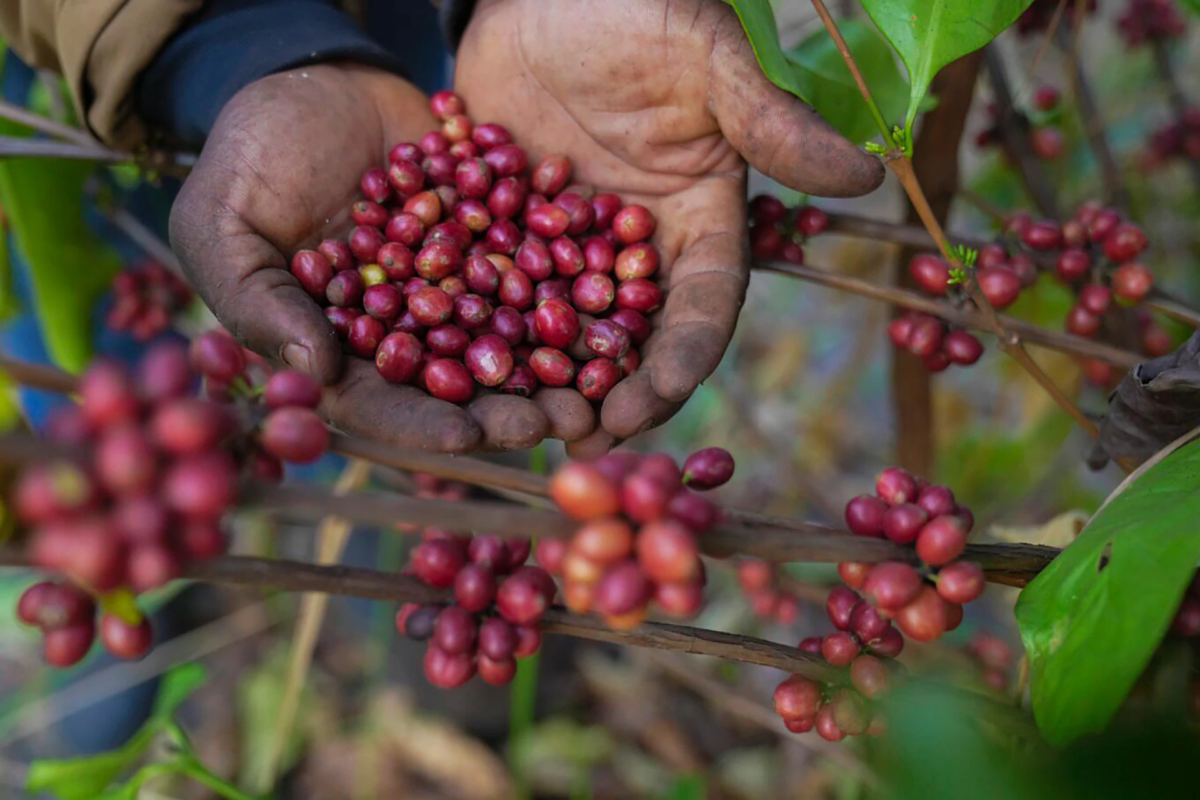
The challenges facing South Sudan are myriad: humantiarian crises, the worsening climate change effects, macroeconomic shocks, and spillover from the neighboring civil unrest in Sudan have made life in South Sudan deeply troubled. However, there is a slight bit of good news in the midst of all the conflict: new investment in agriculture to provide economic prosperity and promote peace. And at its core is the hopeful growth of an emerging coffee sector.
Economic Background in South Sudan and the Need for Coffee 

According to the African Development Bank, oil accounts for 90% of government income in South Sudan. However, it provides little to no economic value to the populace in terms of employment. The country’s mining industry, though minimal, is largely exploitative of locals. Subsistence agriculture and livestock rearing, which are the primary sources of livelihoods for locals, are barely adequate, with production being affected by border and land disputes. These and other factors have forced youth to migrate to urban areas and some to join the militias.

Experts have posited that developing alternative wealth-generating options can lift locals out of economic hardship. For example, John Prendergast, CEO of a not-for-profit that fights crimes against humanity, the Enough Project, believes that specialized farming, like coffee, can benefit societies and focus them on peace. Established projects such as the partnership between Nespresso and TechnoServe in 2016 have shown that rebuilding South Sudan’s coffee sector can create commercial diplomacy where warring neighbors can come together and freely interact through coffee centers, a perfect vehicle toward economic prosperity and peace. Adding to these, Equitoria Teak Company (ETC) has come up with a coffee project that aims to turn the country into a coffee origin giant.
Using Climate-Resistant Excelsa Coffee for Wealth Creation and Peace 

In 2021,  launched a coffee project called “Excelling in Excelsa” in Yambio and Nzara counties of South Sudan to add to the country’s alternative wealth-creation bank. According to Ian Paterson, the Managing Director of ETC, the project was launched together with three partners: The Netherlands Enterprise Agency (RVO), which funded the project, Cordaid (lead partner), Hummingbird Action for Peace and Development (which conducted community mobilization), and the Food and Agriculture Organization (which was in charge of the identification of the initial organized groups, especially from the SAFER project).

“Born and raised on tea and coffee estates in Tanzania and Malawi, I’ve spent over three decades working across West, East, and Southern Africa in sustainable forestry and timber operations,” Paterson says. “This lifelong exposure to agriculture and my deep passion for land and people brought me to ETC, where I now serve as Managing Director.”

According to Paterson, ETC is the largest teak company in South Sudan and second in Africa. When they harvested the trees between 2015 and 2020, the company realized that there was a need for a more immediate source of income for the communities because replanting teak would require 25 more years before another harvest. That is when the company turned to coffee.

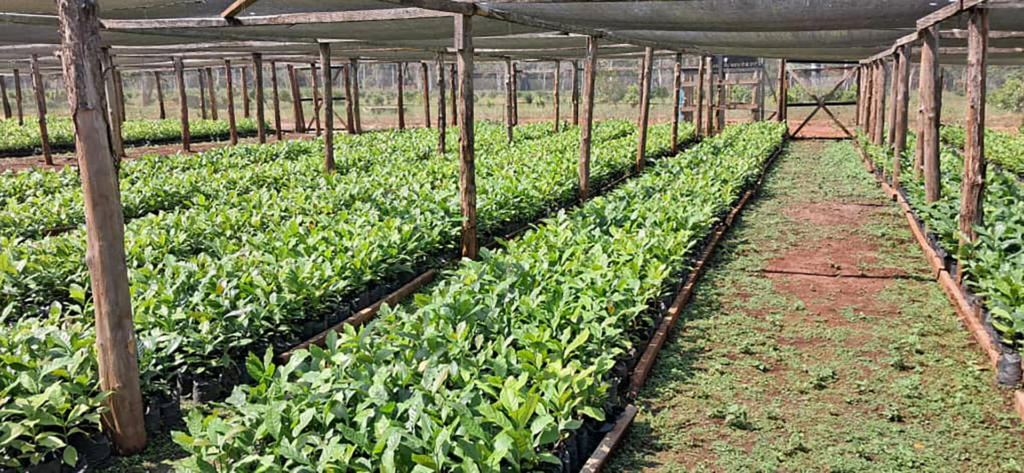
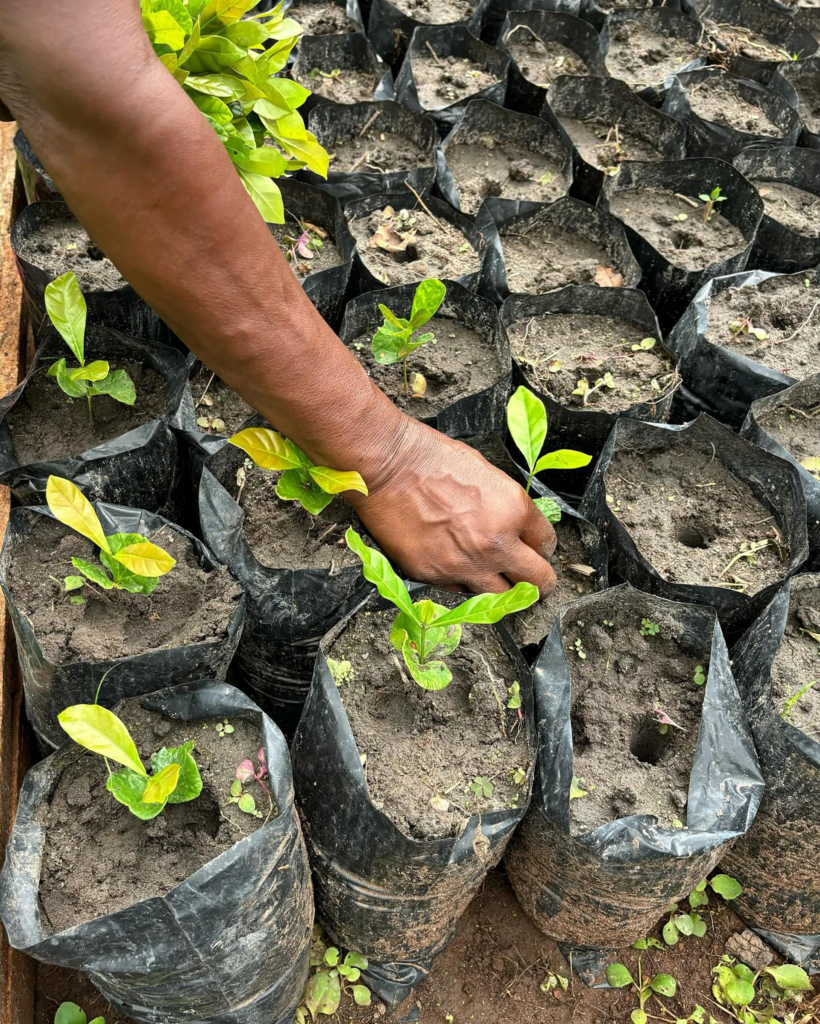
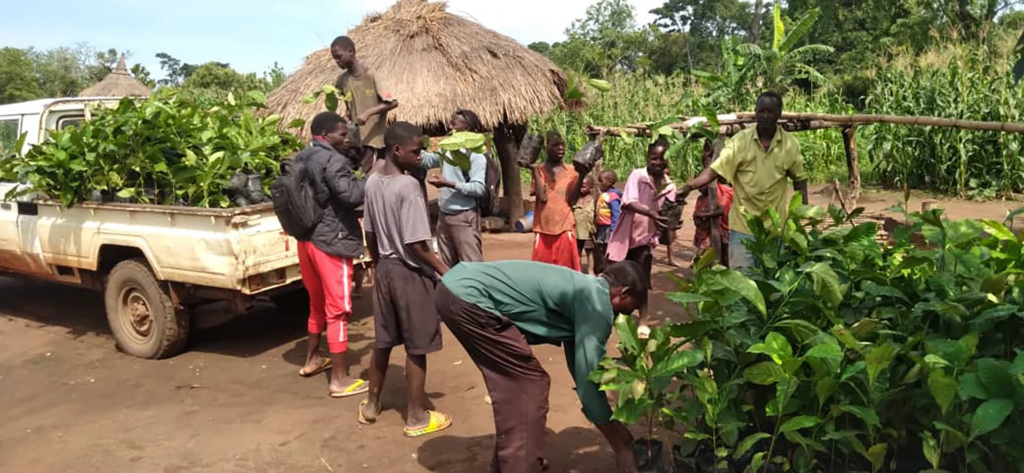
The coffee project concentrates only on the Excelsa coffee variety grown on the company’s 178 acres. It also directly involves a growing network of over 1,500 coffee farmers managing 1,360 acres, 40% of whom are women. Additionally, the project has created more than 190 direct jobs, again with a 50-50 gender balance.

“Excelling in Excelsa aims at improving the livelihood and creation of jobs in an area heavily dependent on subsistence farming and foreign aid. It also aims at reviving the coffee sector, which was vibrant before the second Sudanese civil war of the 1980s, by introducing a cash crop, thereby creating a sustainable income for the community. Additionally, it aims at introducing a climate resilient coffee variety: Excelsa, a species native to South Sudan and known for its ability to withstand harsh climatic conditions compared to Arabica and Robusta coffees,” Paterson tells Sprudge.
excelsea-in-south-sudan-8

Transforming and Developing the South Sudanese Coffee Industry

The coffee project seeks to transform and develop the South Sudanese coffee industry by making it not only economically appealing but also improving food sustainability. It has introduced an agroforest farming system where farmers are trained to intercrop coffee with teak trees, groundnuts, beans, and bananas to provide additional income and improve the food basket. According to the MD’s estimates, each participating farmer has a family of 10 individuals benefiting from the project. Therefore, the project indirectly impacts over 15,000 people, focusing on improving food security and providing sustainable income through agroforestry.

“We are transforming farmers from producing low-quality coffee for local consumption to a high-grade specialty coffee for the international market. The project has also empowered women and youth by providing them with improved income and stable jobs, and is positioning South Sudan as a new origin for unique specialty coffee on the global stage, challenging the dominance of traditional coffee-producing nations,” Paterson says.

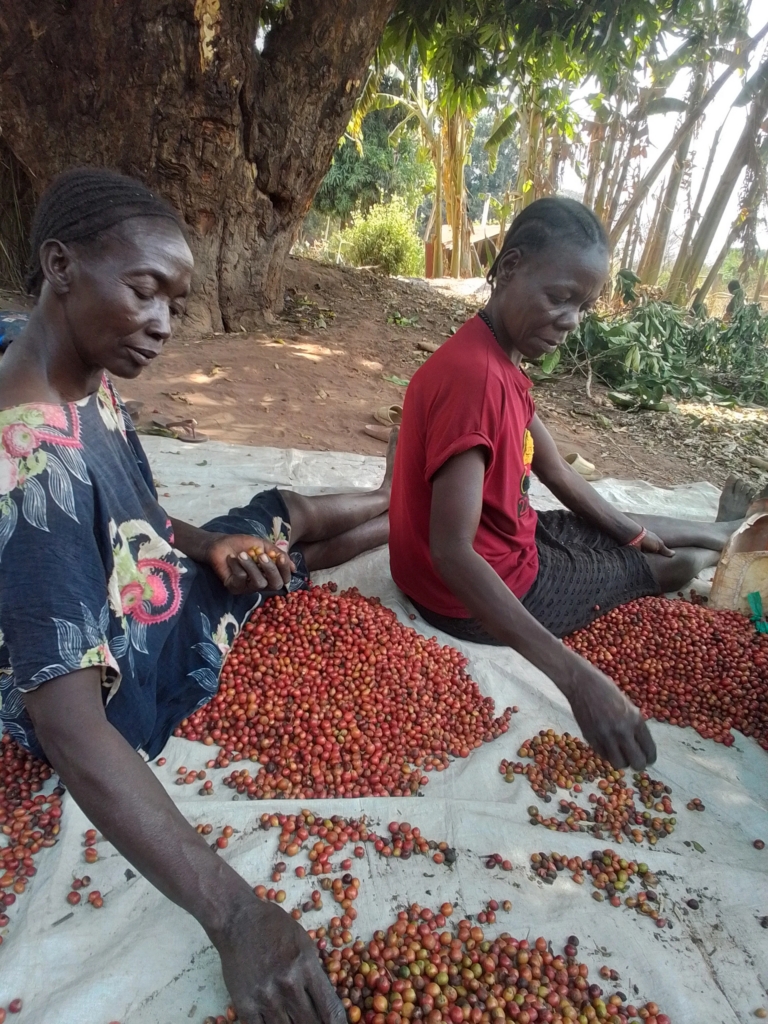
ETC mainly processes the Excelsa coffee by wet and dry mills, producing export-ready green beans. The company also has a local roastery that caters to the local market. Their coffee has been tasted by several cuppers who have classified it as unique, with a fruity, spicy, and tart flavor profile, and constantly scored above 80.

“Out of the five tons of green beans harvested last year, four tons were sold to the international market, while one was sold in the regional and local market. Value addition was done by wet processing the cherry and dry milling of the parchment, resulting in clean beans ready for the international market. Roasting was done for both the local and regional market,” Paterson says.
Excelsa Coffee Species and Consumption

Excelsa Coffee (Coffea liberica var. dewevrei) belongs to the Liberica, one of the four major coffee species, but accounts for barely 2% of global coffee consumption and a reported 7% of global coffee production. The topography of the Equatorial regions of South Sudan is suitable for Excelsa Coffee because of its equatorial climate with dense forests, and mountains such as Imatong and Mount Kinyeti.

With deep roots and high resistance to drought, diseases, and heat, the species blossoms where Arabica and Robusta flop. In places like South Sudan, where the effects of climate change are annihilating ordinary coffee trees, Excelsa stands out as a sustainable, scalable option. Although the species’ roots is sometimes thought to be in Southeast Asia, current evidence places it in Africa.

“In 2023, Dr. Aaron Davis [of Kew Gardens] conducted a study that traced our Excelsa coffee back to its South Sudanese roots, identifying it as an origin variety dating to the 1920s. This discovery affirms the coffee’s natural adaptability to our region and adds a layer of heritage and authenticity to our story,” Paterson explains.

While coffee consumption in South Sudan has historically been minimal, “Excelling in Excelsa” has fostered a thriving local commerce of Excelsa coffee while targeting international export and fostering peace in South Sudan.

Daniel Muraga is an anthropologist and freelance journalist based in Nairobi.

Categories
Africa

In Uganda, An Ambitious New Project Sparks Coffee Value Addition

Across the continent, Africa is increasing the pace of her paradigm shift from raw coffee bean exports to a more economically beneficial model of value addition and domestic consumption. What exactly this looks like differs from nation to nation, and in Uganda a unique model is underway. It’s called Inspire Africa Coffee, and it’s a modern coffee park.

Dubbed Africa Coffee Renaissance Chapter One, the company has a blueprint for the coffee sector, targeting $5 billion within five years through coffee processing and value addition, product diversification, domestic consumption, export improvement, and coffee tourism. The group has established a multibillion-shilling modern industrial park in the Ntungamo District to produce exciting ready-to-use coffee products.

“The Park concept started in 2017 but took off in 2021,” Perez Akanyijuka, the Program Manager of Inspire Africa Coffee Group and the company behind the Coffee Park, tells Sprudge Media. “We are currently at 60% into the project completion and have scheduled May 2025 for the park to be fully operational. The coffee roasting section of the park is fully installed and we are doing non-commercial production of ground coffee.”

The Group’s CEO projected the park would initially process 10,000 metric tons of coffee earning it $128 million, a dream that has started to materialize.

Coffee Background in Uganda

Coffee in Uganda is purchased from farmers and exported in raw form to developed countries. But for domestic consumption, that very same coffee is processed, packed, and imported back into the country—a strange arrangement for Uganda’s burgeoning coffee drinking market. Based on the exorbitant prices at which this imported coffee is sold, coffee farmers are relegated to downcast spectators in a home game; many settle instead for cheap tea leaves from their local supermarkets and shops.

“The battle for coffee is to stop the hemorrhage [of money] because Africa has been bleeding for a long time,” President Museveni, who has extended support for the park said, during an inspection tour of the park in May. He observed that in Uganda when you export unprocessed coffee you get $2.5 per kilogram, but when exported to countries like Japan that do not even grow coffee, they process it and get $40 per kilogram. He said this shift in the value chain will increase Uganda’s coffee revenue from $1 billion to $4 billion.

Coffee Value Addition and Job Creation

The coffee sector is changing fast in Uganda, and indeed, across Africa, thanks to projects like Inspire Africa Coffee. The project’s overall objective is to increase value for coffee in Uganda, according to Akanyijuka. His goals are ambitious: the above stated goal of moving from $1 to $4 billion a year has even more room to run, with a $5 billion annually projected by 2030.

The park already has employees, including those helping to manage coffee drying and roasting operations. Some 163 employees as of September 2024 are employed by the park, including permanent staffers and technicians. The park produces premium coffee roasted and packed under four different brands—Inspire Africa ground coffee, Haraka instant coffee (sachets and capsules), Era coffee beauty products (hand lotions, body cream, lip bum, shampoo, and more), cold brew coffee (in cans), and coffee drips, with a promise of malt coffee and coffee energy drinks.

Africa Coffee Renaissance Chapter One

Africa Coffee Renaissance Chapter One is built around a strategy to enhance and increase coffee value in Uganda. But it’s a multipart approach, according to Akanyijuka. These include cultivating and encouraging domestic coffee consumption in Uganda, diversifying the varieties of coffee products, establishing a coffee academy, and promoting coffee tourism in the country—something the CEO says will need an additional $122 million.

2.3 million tourists visit the country annually and the park aims to integrate coffee tourism to maximize the gains. Most tourists have limited knowledge about coffee beyond what they get from coffee shops or coffee cafes. Visiting coffee farms can be a rewarding experience for tourists to appreciate the beautiful coffee bushes, mingle with people behind their favorite drink, and sample locally brewed coffee “concoctions” at the coffeeroots (grassroots). Boasting an expansive 92-acre coffee garden at the park’s location, the company hopes to offer recreational facilities on-site to maximize revenue, with Akanyijuka stating, “Every day is a learning process and we’re focused on our objectives for the communities and the country to get value for their coffee.”

The company is mobilizing stakeholders and sharing innovation and knowledge to trigger changes in the sector to ensure what they do in Ntungamo [the Park’s location] can be replicated across the country. As the program manager informs us, the park cannot revolutionize the sector alone. It needs the participation of other stakeholders because they are looking at processing 60,000 metric tons of coffee per year which is far below what the country can produce. The program also aims at raising the living standards of the farmers for a decent life.

“We want to stimulate development by improving prices for our smallholder coffee farmers from the current $2 to $5 per kilogram of raw coffee beans while increasing our company profits and revenue to a minimum of $2.8 billion quarterly,” Akanyijuka tells us.

Perez Akanyijuka, the Program Manager Inspire Africa Coffee Group

Overcoming Challenges

The project has suffered negative publicity, especially from coffee cartels in Uganda.

“The top owners of coffee export companies in Uganda are mainly rich foreigners obsessed with exporting coffee in its raw form,” Akanyijuka tells me. “They have tried to tarnish the name of the company, that of the CEO, and the park project. This was especially so when the Uganda government got interested and started investing in our idea.”

The park caught the eye of the Ugandan government in 2022 when it started investing in the hub with an initial sum of $10 million. Since then, the government has continued supporting the venture with more funding and in other ways such as business partnerships and market promotions through the Uganda Coffee Development Authority. Coffee ranks as the second highest foreign exchange earner in Uganda after gold. Although the park is currently 100% private, it has plans to let the government in as a shareholder in the next three years.

Established brands such as Nescafe are also sources of challenges because some people still harbor historically ingrained beliefs of equating a brand’s precedence with superiority. The park aims to prove to the people that the country can produce premium, first-class coffee that can be enjoyed locally and affordably.

The coffee sector in Africa heavily relies on foreign technology and is subject to external pressure and regulations. In Uganda, the industry depends on technologies from Turkey, Italy, China, India, and others. This is not only expensive but also unsustainable. To remedy this, the Park is establishing a coffee academy to impart innovation, knowledge, and skills to fast-track technology and improve coffee production and processing by the locals and coffee farmers.

Coffee farming and processing is an investment-heavy exercise that needs a lot of capital. Getting capital and loans from banks in Uganda (and Africa) is hard and punitive. According to the manager, bank interest rates in Uganda are currently at a high of 16% meaning that they are not only punitive but also negatively affect businesses in terms of ROI.

Looking Ahead

The program manager is all set for the future of coffee in Uganda. The park wants to change the coffee-drinking culture in Uganda in line with the new wave of coffee in Africa from the current domestic consumption of 8% to 30% of the coffee volume produced in the country in the next few years.

“Under our long-term plan, we intend to set up six other hubs across the country. These will be in Eastern Uganda in Mbale, in the West Nile region where there is coffee, in Central Uganda at Muyembe, and Masaka District, among other coffee-producing districts. [Additionally], no coffee beans will be exported unprocessed from Uganda by the next 20 years,” Perez Akanyijuka concludes.

Daniel Muraga is an anthropologist and freelance journalist based in Nairobi.