Categories
Culture

In Austin, Mercado Sin Nombre Offers Deep Respect For The Coffees Of Mexico

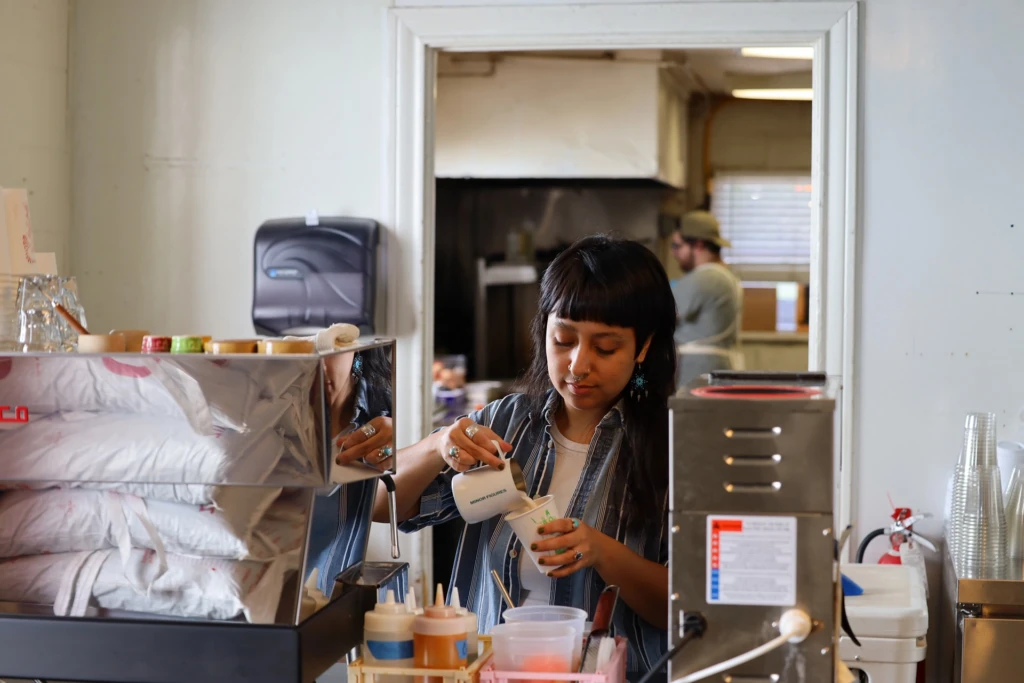
Mercado Sin Nombre beckons from an alleyway between buildings. It’s a little colorful nook wafting warm rich smells and damn good music, with a hand painted sign promising café chingón. On a weekend morning the line starts long, stretching at times to the street as regulars, locals, and people drawn here by the hype stand in the perpetually muggy Austin air. Out the side door a steady stream of food emerges: golden masa twinkies, fluffy masa pancakes and masa biscuits served with a rotating fruit compote, New Mexico size burritos in tortillas that morph daily from dusty blue to purple to plum. Everything is so freshly ground and directly sourced it feels ethereally different from any other cafe in the city. Maybe the country.

mercado-sin-nombre-4-scaled

At the front of the line, a high window slides open. There is a feeling of ease and slowness, as if the line, for the people up front, doesn’t exist. The languid pace adds to the anticipation and sets a Sunday mood no matter the day. And in turn, the customers at Mercado Sin Nombre behave differently—they talk with their friends, read books, smile at people they don’t know. Here, in the heart of Austin but outside the press of time, we wait willingly, knowing that the reward will be good.

Mercado Sin Nombre began selling coffee and corn tortillas on the Austin farmers market scene in 2020, and opened as a brick and mortar in 2024. Here the focus is on Mexican coffee and masa. Word of mouth around the shop has been immense; now there’s a Michelin Bib Gourmand to back it up, and a significant social media factor to keep the line long. Despite this, or perhaps as a reflection, Mercado Sin Nombre stays true to its unwavering heart. “On the weekend it’s like a party,” says owner Julian Maltby, “but during the week it still has the original feeling of a little rest in the middle of the city.”

mercado-sin-nombre-6-scaled

The two dominant flavors here are coffee and corn, which meet each other playfully throughout the menu. “By giving us these very specific parameters, it allowed us to almost explore more,” Maltby says. Mexico is always at the forefront of everything they do here. This make sense, but it’s quietly innovative, too.
mercado-sin-nombre-3

Often—not always, but often—the coffees of Mexico are served in the United States as part of a blend. Compared to other origins, Mexican-grown coffees are rarely given the same pride of place; in an ensamble they might add rich tones, but seldom do they stand alone. In Mexico itself this isn’t the case: explore places like Mexico City and Oaxaca City and you’ll find remarkable roasters and cafes showing the depth and range of the nation’s coffee production. Barista and roaster Carlos de la Torre—a Mexican Barista and Brewers Cup champion and founder of Cafe Con Jiribilla—was a direct inspiration for Maltby’s vision for Mercado Sin Nombre, he tells me.  “I realized no single Mexican coffee could showcase everything that the country has to offer,” he tells me. “There is enough for me to have a business that focuses only on that.”
mercado-sin-nombre-13

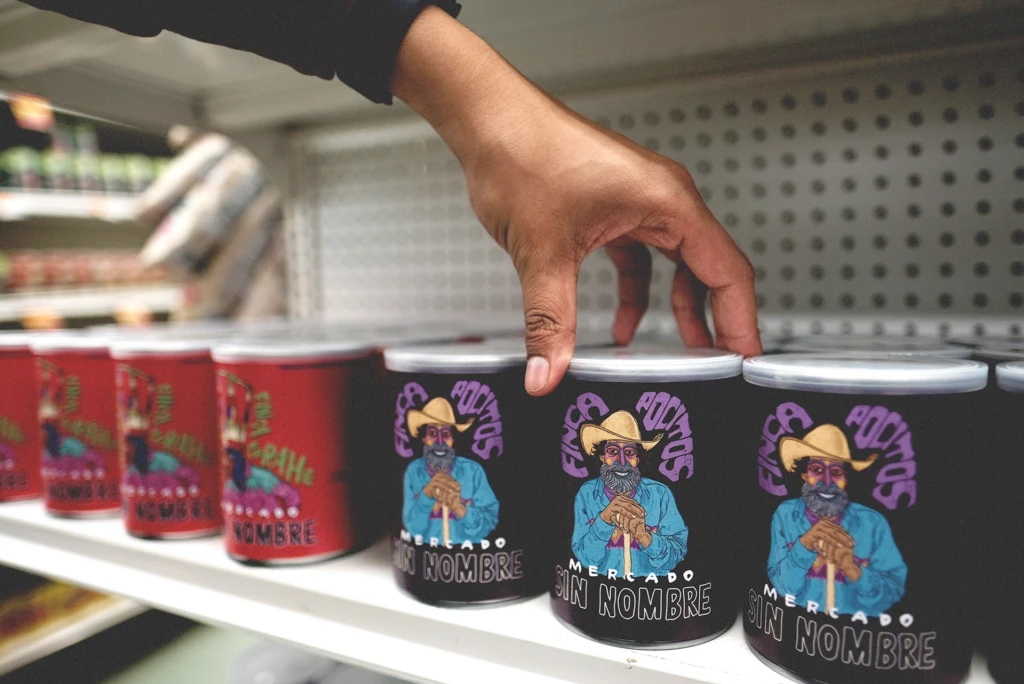
The coffee program at Mercado Sin Nombre currently includes beans from Chiapas, Veracruz, and Guerrero, each package adorned with a mask that ties to the coffee’s specific place of origin, illustrated by artist Rogelio Rosiles. “We approach roasting with a lot of respect for the producers that grow the coffee,” Maltby tells me. Their program focuses soley on Mexican grown coffee, and this concept helps serve as a foundation for the cafe’s menu of creative drinks with ingredients like marigold, poblanos, platanos, moringa leaf, and black lime.

mercado-sin-nombre-7

Maltby grew up in Austin and studied architecture in El Paso and Albuquerque, before taking an internship with the architect Ludwig Godefroy in Mexico City. This knowledge of space and design helped inform the cafe’s immersive and distinctive layout. Liveliness and hospitality and color define the experience, which feels reflective of the same reverence for Mexico found in the cafe’s menu. Mercado Sin Nombre’s vision is simple yet complex: portraying through architecture, hospitality, and flavor that nameless element, as its name connotes, where the texture of our own experience meets that of our communities. Here, corn and coffee becoming integral to the experience of life. “It’s just the ingredients, they are doing so much,” says Maltby. “All we are doing is adding the seasoning.”

mercado-sin-nombre-2
Mercado Sin Nombre is located at 408 N Pleasant Valley Rd, Austin. Visit their official website and follow them on Instagram.

Oona Robertson is a freelance journalist based in Las Vegas. Read more Oona Robertson for Sprudge.

Photos courtesy of Mercado Sin Nombre
Categories
Culture

In Boulder, A Modern Approach To Cafe Culture At January Coffee

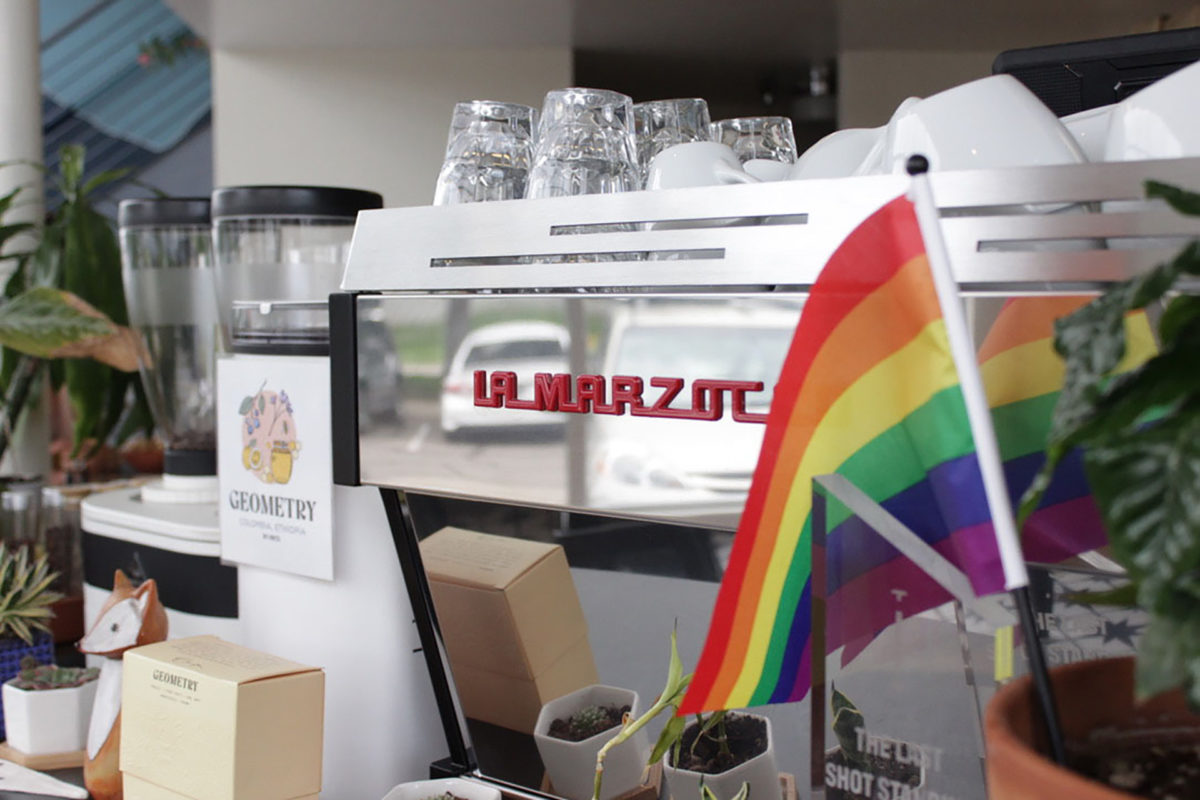
January Coffee sits on the prow of a strip mall in Boulder, Colorado. Next door is a hair salon, a Michael’s, a Petsmart, a Walgreens; the Flatirons reflect off its window glass the same way they do for so many storefronts in the city of 108,000. But inside is something kind of weird. Or someone; really, it’s two someones: Kristi Persinger and John Imig.

For Persinger and Imig, January the month is as important as January the cafe. They met in January (2017), started dating in January (2018), moved to Colorado together in January (2020), and formed what would be the idea for January (the cafe) in January (2021).

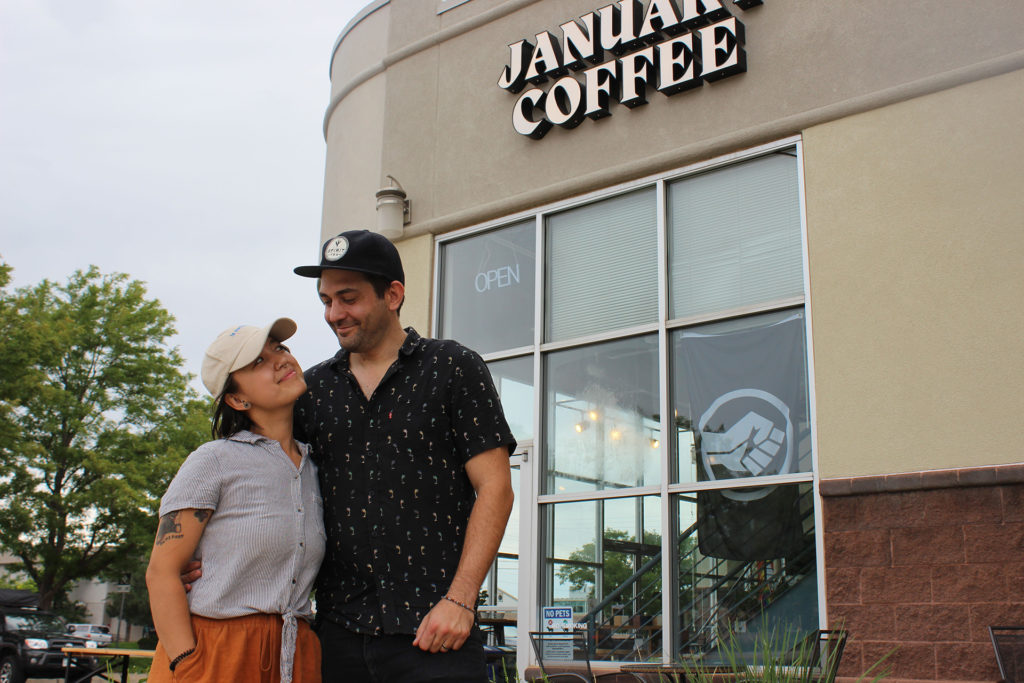
Kristi Persinger and John Imig outside of January Coffee
Kristi Persinger and John Imig

In Boulder, small businesses live and die on their ability to cater to students and outdoor recreators. Besides the outsized student population, which swells in the autumn and spring, there are twice as many sporting goods and gyms here per capita than in anyplace else in the country. 18–35-year-olds stalk the medians of parking lots in plush running sneakers, darting between the doors of fitness studios and immaculate 4×4 SUVs, which crawl up every thoroughfare into the mountains.

January’s success here is predicated on neither of these things. Instead, the cafe is built on Persinger and Imig’s decades of experience working for specialty shops up and down the west coast, from Intelligentsia to S​​tumptown Coffee Roasters and many in-between.

“Working as a woman of color in coffee, I haven’t always necessarily felt that my work environments have been that way,” Persinger says. “So we have an internal goal to make this shop the best place that people have ever worked. We can try to make it a little bit better for ourselves, you know?”

“We wanted to create an environment that’s inclusive and equitable,” Persinger says. “Where everybody’s ideas are heard and there’s an openness to share.” Which, in January’s case, results in a graceful work environment where pressure is diffuse and everyone, regardless of background, is given the support they need and is paid and recognized for their role in making the cafe work, and a cafe where every customer is served the same great coffee without pretense.

“Working as a woman of color in coffee, I haven’t always necessarily felt that my work environments have been that way,” Persinger says. “So we have an internal goal to make this shop the best place that people have ever worked. We can try to make it a little bit better for ourselves, you know?”

Part of the way they do that is by encouraging a culture of openness and honesty.

“I don’t want people to feel embarrassed about sharing that they’re having a particularly bad day,” Persinger says. “I want to be understanding of that, because we’re all human, and the thing that we try to do is just lead with empathy in all that we do, and that makes just such a big difference in how everybody interacts here. And then our staff are all stoked to be here and really proud of where they work.”

Imig adds: “We’re open about our mental health with our staff and, and when they’re open with us about theirs, we can be supportive.”

Another part is by paying January employees a living wage. “Because we’re a new shop,” Persinger says, “we didn’t have a fully fleshed out budget in the beginning, but we knew that we wanted to pay everybody more than the current minimum wage.” In Colorado, that number is $9.54 for tipped employees as of this writing. “And we just kind of landed on a number that we thought we could afford to start, which right now is $13.”

“We started everybody at the same exact wage,” Imig says. Regardless of experience, their philosophy is that everyone at a shop “pulls their weight equally. Every job in the cafe is important and just as hard as another.” Just because one person’s a trained barista doesn’t mean that their colleague on register is doing any less. It also means tips are pooled and distributed evenly across employees.

And thought they haven’t fully figured out what their wage structure will look like in the future, beyond their current team of 11, which is up from just the two of them on opening day back in May of 2022. Eventually, if January continues to grow and expand to new shops, Persinger says they “want to think about how we can provide equity to people who are in it for the long haul.” The reasoning is that if employees of businesses are expected to take ownership over the success of their shop, they ought to have actual ownership over some part of it too.

As a very young, independently-owned and funded cafe, January’s able to offer living wages in large part because of how hard Persinger and Imig both work. After funding the cafe on their own, not taking salaries during January’s first three months, and each holding down a second job, they now work a comfortable, combined 160-hour work week. Today they pay themselves barista wages and walk around with bags under their eyes and dad hats to shield them from the high-elevation sun.

“We were trying to give as much to the shop as we possibly could,” Persinger says of the first few months. “In order to allow it to function and make enough money to be able to pay our staff well enough and, you know, afford to operate.”

In addition to being a great place to work, January is a great cafe. Because for however good Persinger and Imig try to be as owners, they are also absolute dorks when it comes to coffee. Just huge honkin’ coffee nerds.

January’s a multi-roaster that brings in coffee from across the country—they always carry Onyx, and have featured roasters like San Francisco’s RitualDune out of Santa Barbara, and Mother Tongue from Oakland. They operate in the Australian model, offering a full-service menu of homemade food that’s all great—they make almost everything in-house, from breakfast burritos to the vanilla that goes into their drinks.

“We love great coffee, we love amazing food,” Persinger says. “And we wanted to be able to have both of those things in our shop. Because I feel like it’s just a more holistic experience when you can have an awesome breakfast burrito, that’s like the best you’ve maybe ever had, and great coffee.”

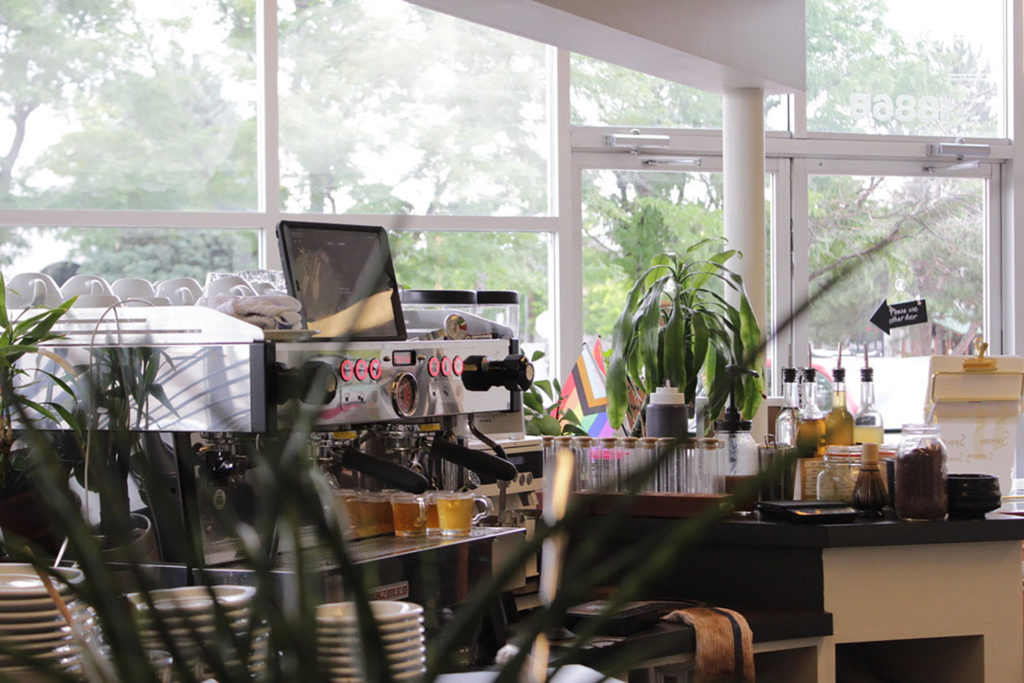
Then, she gets a bit conspiratorial, lowering her voice. “The craziest part is that we are a headless ventless kitchen,” she says. “So we can’t cook anything on a stove.”

Imig seems to nod. “We have to do everything in ovens.”

“So that was the thing that makes this so difficult,” Kristi says. “It’s sort of literal insanity.”

And while it’s true that making a full food program work with only an oven and a panini press is a kind of insanity, it can’t really be said that that’s the thing that makes January so difficult. Sure, having to scramble eggs in an oven is inconvenient and hard, but from an outside perspective, what makes the project of January so difficult is everything. What Persinger and Imig are trying to do, and what they do by necessity, is just difficult. All of it. From opening their doors with two weeks of operating expenses in the bank to working a double before taking off to their second jobs—it’s all difficult.

“There are days when we want to give it all up,” Persinger says. “Because I’m so tired, and I can’t do this anymore. And then some days where I’m so incredibly grateful for what we’ve created and seeing our literal dream come to fruition. It doesn’t get any better.”

January Coffee is located at 1886 30th St Suite B, Boulder. Visit their official website and follow them on Facebook and Instagram.

Michael Light is a freelance journalist based in Seattle. Read more Michael Light on Sprudge. Photos by David Light.