Growing up, I thought coffee had one taste. Not bright or complex or fruity. Just coffee. The way rain smells like rain. That was the whole vocabulary.
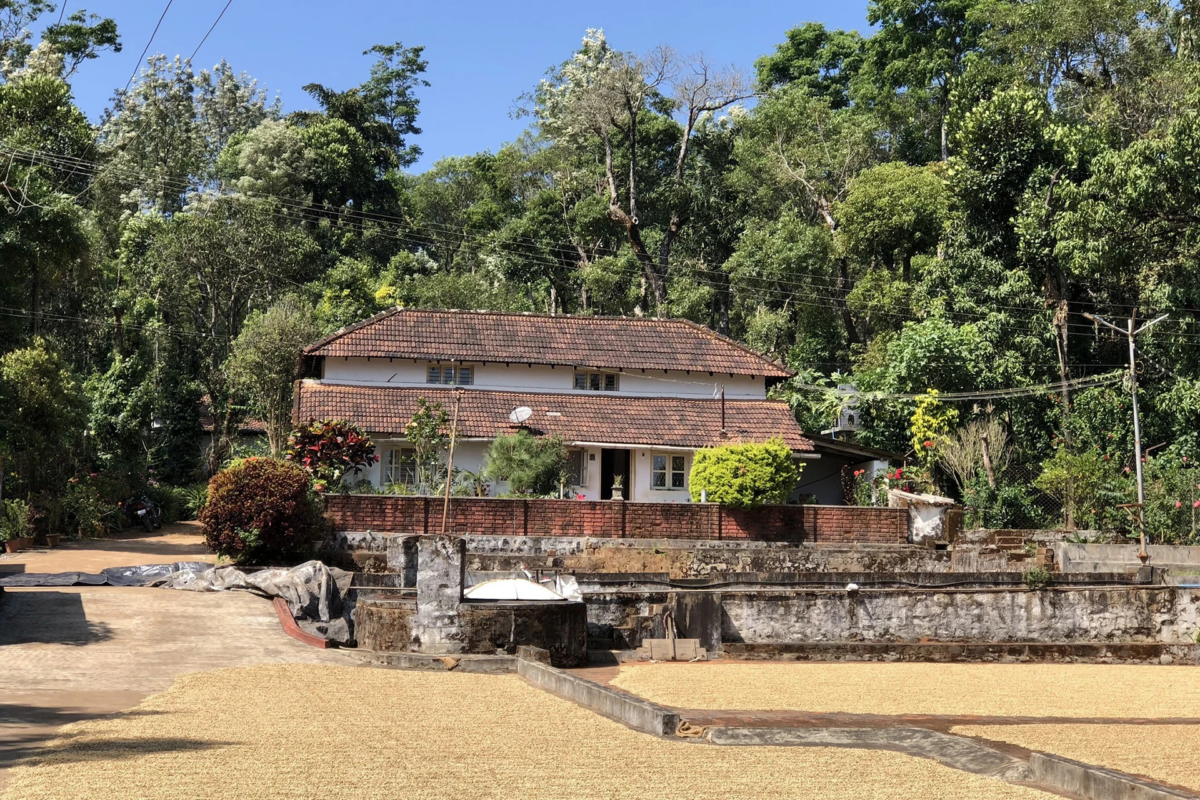
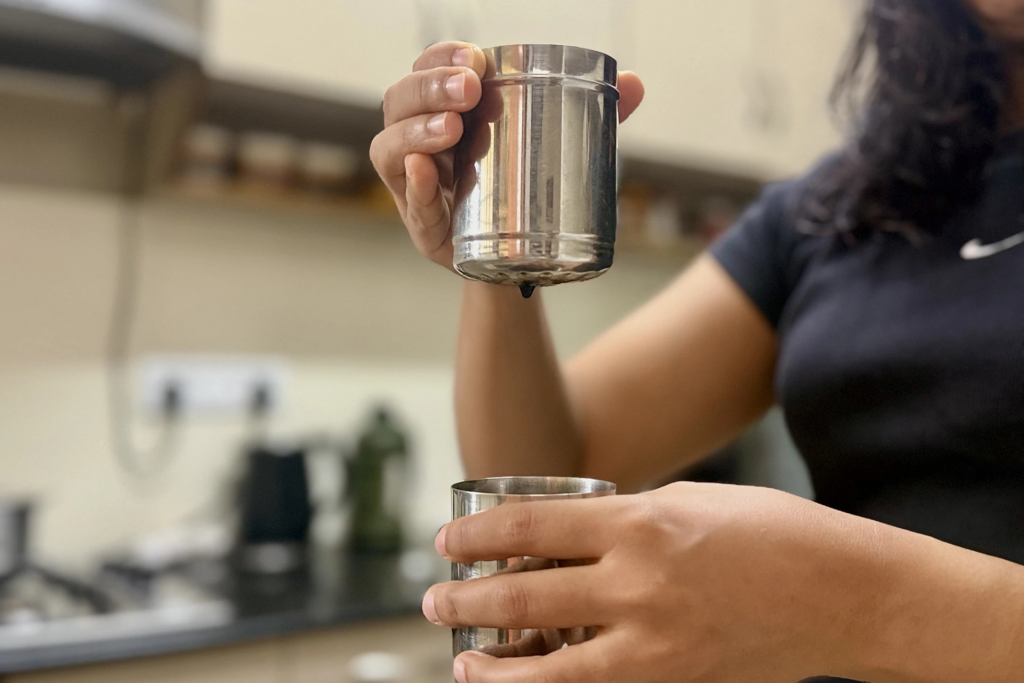
We had a South Indian filter at home, the kind that drips slowly, one chamber into the next, the whole house smelling of it. The coffee came from my grandfather’s estate. Arabica, with no chicory (he was strict about that) and every few months we’d take green beans to a small roasting shop down the road. One man, one machine. The beans went in green and came out dark brown. You picked up the powder on your way back. I never watched the roasting happen. Coffee was what you came home to. I thought that was all there was to it.
My first real encounter with specialty coffee was a cupping session in Bengaluru. They put fruits and nuts on the table next to the coffees: mango, almond, orange. Here is what these taste like. Now find them in the cup.

My South Indian filter coffee brain couldn’t make sense of this. Coffee wasn’t fruit. Coffee was bitter, dark, something you cut with milk and sugar if you wanted sweetness. The sweetness didn’t live in the coffee itself, you added it. And now someone was asking me to find mango in a cup I hadn’t touched yet.
I was blank for most of the first half. Then they slowed down and put two coffees side by side. Not find the mango, just—what’s different between these two? That I could do. One was sweeter than the other. Something sat heavier at the back of my tongue in one and not the other. By the end of the session I wasn’t finding tasting notes, but I wasn’t lost either. There was something to hold onto.
Still, the more bags I picked up after that, the more the notes felt like a different language—grapes, marigold, black tea, words I couldn’t attach to anything. I remember staring at a bag once thinking—who tasted this and wrote marigold? How certain do you have to be to put marigold on a bag and mean it?
So I just kept tasting. Bought coffees, brewed them at home, sat with them, two cups at a time, the way they’d shown me. That gap, between what I could taste and what I could name, stayed with me for a long time. But it got smaller.
I signed up for SCA courses in Arizona. Every morning before class, we joined their QC cupping table. I listened more than I spoke at first. Picked up words here and there, tried to attach them to what was in the cup.
Until Arizona, the coffees I’d been learning on were all from India. The tasting notes were things like chocolate, nuts, cherries, and marigold. But they still sat comfortably inside my idea of coffee. Then I tasted an Ethiopia washed and my brain just stopped. This tastes like lemonade. This cannot be coffee. A few days later, raspberry. Then jasmine. Then I looked up and someone said one tasted like cheese and everyone nodded like that was normal.
We cupped a coffee from Papua New Guinea. I hated it. I didn’t hide it. My trainer laughed and said it was one of their best sellers. One of the tasting notes was olives. I hate olives. He said—no wonder.
I picked up jackfruit in a cup. I didn’t wait for someone to name it, I just said it. My trainer was the only one who knew what I meant. Half the table thought I meant something savory—they knew it as mock meat, thought I was describing something gone wrong. I had to start over. No, ripe jackfruit—sweet, almost fermented, pulls apart in strings.
The same cup, he said, but never the same coffee.
It went the other way too. Someone would say licorice and I’d have nothing. Key lime pie, honeydew melon. Real flavors for them, backed by real memories. For me, just words I was trying to attach to something. Even pineapple wasn’t the same—they meant the canned kind. I meant fresh cut, fully ripe.
Then one day they put five basic tastes in front of us at different concentrations. I picked up acidity almost immediately. Bitterness, I missed. Most of the others had the opposite experience. I grew up eating tamarind straight from the pod, the tamarind-chili-salt candy my grandmother made. Bitter lime pickle always on the table. Sour candy over sweet. Raw mango over ripe. Acidity wasn’t something I had to learn to find. It was already home.

My palate wasn’t untrained. It was trained by a different kitchen.
The language of coffee often assumes we’re all drawing from the same pantry. Someone says licorice and I have nothing. I say jackfruit and they think of mock meat. If the reference doesn’t exist in your memory, the note doesn’t exist in your cup.
For a long time I thought the problem was mine. That I needed to learn faster, taste better, catch up. That everyone else at the table was starting from somewhere and I was starting from nothing.
Somewhere along the way that stopped feeling true. The more I paid attention—to coffees, yes, but also to every meal I ate, every market I walked through, the smells I’d stopped noticing—the more the cup started to make sense in my own language. I started understanding where my palate had actually come from. The tamarind. The bitter lime. The fresh cut pineapple. None of that was absence. It was a different education.
Once I understood that, the cupping table felt different. Less like a test I was failing, more like a conversation I was finally allowed to be in. Now I watch someone at the cupping table at the roastery go quiet the way I once did, staring into a cup, waiting for the right word. I know what that feels like.
I grew up thinking coffee had one taste. Now when someone says “this tastes like coffee,” I don’t know what they mean. Which coffee? From where? Processed how? The word that used to be a complete sentence is now a question.
Vishrutha Shetty is a coffee professional and freelance journalist based in Bengaluru, India. This is Vishrutha Amar Shetty’s first feature for Sprudge.