Categories
Culture

The Japanese Kissaten Cafe Tradition: Past, Present and Future

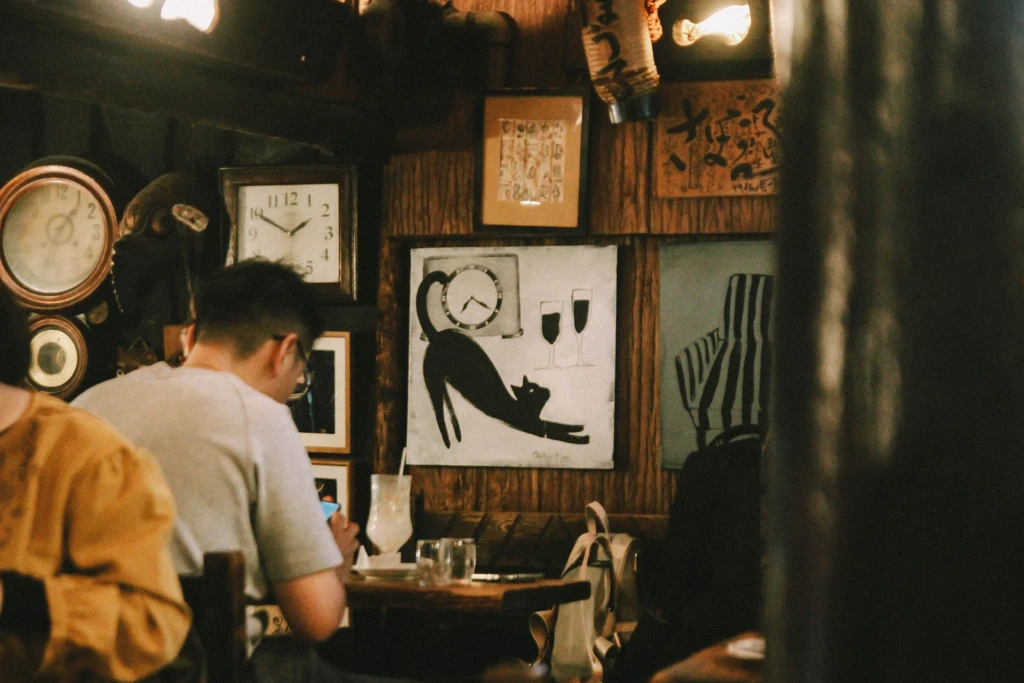
Behind the counter, a single barista operates in near silence. Only the steady drip of water into the coffee grounds can be heard, flowing from a gooseneck kettle gripped precisely between the hands. Customers sit in padded booths or dark wooden chairs that seem out of an entirely different age, hushed thogether almost religiously so.

Kissaten are like chapels to the world of coffee: contemplative, sacrosanct, devoted entirely to the pursuit of the perfect brew. Faithful fans patronize these locations, committed to their kissa of choice, or to the ritual of routine that creates a sanctified space buffered from the outside world. Throughout modern history, from the very first cafe established by Tei Ei-kei in 1888 in Nagasaki to the jazz kissa of the 1920s onwards (which mixed Western tastes of music and coffee), kissaten and their role in Japan have always been idosyncratic, distinct, and full of reverant respect.

What’s remained the same, even as time has passed and the function of the kissaten has transformed, is the fundamental importance of coffee itself.

kissaten_bond-8

What are Kissaten?

“Cafe” is a pale word to describe the unique richness of Japanese kissaten. And, while there may be commonalities between each different kissa—a propensity for dark wood, red velvet fabric that glimmers in sparse sunlight which filters in through stained glass windows, a smokiness that can be attributed to both the minimal lighting and Japan’s relatively lax indoor smoking restrictions—each kissaten is an ecosystem truly of its own.

At its apex is the “masuta–”, or “master”, a pilfered loanword from English meant to convey proprietor, manager, and barista, all in one. More than just serving coffee, “masters” operate according to their own principles, set the tone of the space, and dedicate their lives to the craft—in this case, coffee. Often, each cup is hand-poured, beans selected and ground to exacting standards, with the use of espresso machines eschewed due to the lack of personal touch.

Merry White, in her book Coffee Life in Japan, describes kissaten multifariously as “the haunt of artists, writers, and intellectuals,” as a place that “serves coffee (as) its main offering.” They are also a pivotal third-space that provides a community away from work and home, uncontaminated by outside pressures. Both unassumingly quotidian and a curated escape from the everyday, kissaten have provided a coffee-centered space for countless generations in Japan. They’ve played distinct roles across the last hundred years of society in Japan, and continue to serve an important niche of coffee life in Japan today.

kissaten_bond-16

The History of Kissaten in Japan

Coffee first crossed Japan’s borders during the 16th and 17th centuries on Portuguese ships or through Dutch traders, filtering in through Nagasaki ports at a time when international interaction was strictly regulated by the Edo government. Coffee’s earliest utilizations in Japan weren’t even culinary, but rather medicinal (among the foreign communities), or as stimulants for those working in red light districts. It was by no means an instant hit, and it wasn’t until the late 19th and 20th centuries—when the centuries-long era of isolation relaxed and borders reopened—that coffee began to proliferate throughout a broader range of social classes in Japan.

It was here when all things “Western” poured in, with coffee a stand-out highlight. Returnees to Japan, especially artistic intellectuals sojourning in Europe and America, who brought with them “modern” Western tastes and had frequented cafes during their time abroad, led the charge for cafes as spaces for cultural exchange without rigid hierarchy, in contrast to the formalized rituals of tea ceremony. At the same time, a mass influx of rural migrants flocked to urban areas, with cafes becoming a “home away from home” for these transplants to connect—a large number of which were young women, sent to industrialized cities to financially support their families, but who found a taste of independence away from constrictive, traditional values.

These early kissaten cafes infused elements of inspiration from abroad, cherry-picking imagery of Vienna, France, London, even Brazil into their designs, while serving up inventive Western dishes (such as ketchup-based Napolitan pasta, which remains a kissaten standard even to this day) alongside the main draw: coffee. It created a space that, while founded in homage to imported ideals, developed to become something that was wholly and uniquely Japanese.

kissaten_bond-6

Kissaten in Modern Times

But far from being antiquated relics of history, a leftover remnant of an era before the third-wave revolution and the prevalence of nationwide coffee brands that diminished the number of independent cafes—both domestic, like Doutor or Renoir, or imported sensations, like Starbucks and Blue Bottle—kissaten have experienced a resurgence that can’t be explained away with mere Showa retro nostalgia alone.

While no mention of Japan’s greatest kissaten would be complete without Ginza’s Cafe de’Lambre, a legendary fixture of Japan’s cafe culture since its establishment in 1948, other quintessential Tokyo kissaten, (GalantGionSaborCafe Paulista, a near-endless parade of atmospheric establishments) dutifully continue to service their local regulars. Happily, these now inlcude an increasingly younger rotation of faces, as new generations of fans become drawn to the kissaten tradition.

Compared to their chain-store counterparts, kissa offer two unparalleled benefits: personality and community. Unlike the forgettable service of Starbucks, where baristas rotate daily, customers pour in and out faceless, and menus are served to a national standard that lacks that personal touch, kissaten lay mercy to the whim of the master. Each location retains its own distinct charm or kodawari, an obsession with particulars, that might lead one kissaten master to fermented beans and another to specialized siphons, all dependent on what they feel personally leads to the perfect cup of coffee.

There is also an undeniable element of performance in kissaten that draws in customer participation—you’re not just grabbing a cup of coffee, you’re watching the barista navigate through convoluted systems of siphons, flasks, glass tubes, and machinery to create a single brew, all just for you. And no two kissa master pursue the same principles, meaning that in every kissaten lies a novel experience—and also, a different side of yourself. By entering a jazz kissa—centered around high-quality speakers, surrounded by other jazz zealots, all drawn together by a similar passion—customers can slip off their outside identities and immerse solely in drinking coffee, silently, side by side.

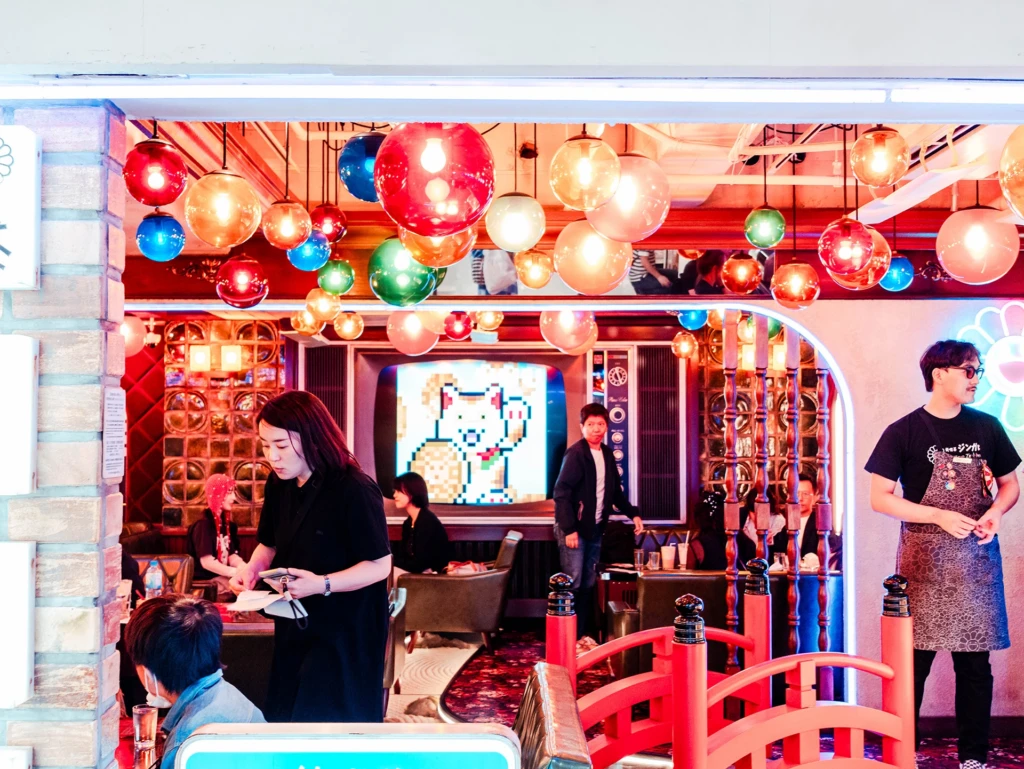
Outside of the historically entrenched icons, newly constructed cafes are also chasing the kissa aesthetic, complete with analog relics and accented with pops of neon. These “neo-kissaten,” which include locations like Shinjuku’s 27 Kissa and Nakano’s Coffee Zingaro (operated by contemporary artist Takashi Murakami’s brand), pursue the visual elements and the craft of coffee, but have a tendency to decentralize the role of the master, one of the key elements of a true kissa.

kissaten_bond-15
kissaten_bond-15

The Future of Kissaten

While kissaten may no longer be in their heyday, the haunts of turn-of-the-age literati or intrepid customers experimenting with their first tastes of Western culture, they’ve become a well-worn fixture across Japan. And, as the outside world churns on at a dizzying pace, overwhelming with workplace demands, academic pressure, or the doldrums of daily life, kissaten continue to act as a refuge. These are a kind of safe space marked by the permeating scent of coffee beans roasting and laid-back music mulling in the background, a haven for coffee-lovers seeking both a cup and a community. By continuing to support them we help ensure that the tradition can continue for generations to come.

Taylor Bond is a freelance journalist based in Tokyo. Read more Taylor Bond for Sprudge.

Categories
Culture

In Austin, Mercado Sin Nombre Offers Deep Respect For The Coffees Of Mexico

Mercado Sin Nombre beckons from an alleyway between buildings. It’s a little colorful nook wafting warm rich smells and damn good music, with a hand painted sign promising café chingón. On a weekend morning the line starts long, stretching at times to the street as regulars, locals, and people drawn here by the hype stand in the perpetually muggy Austin air. Out the side door a steady stream of food emerges: golden masa twinkies, fluffy masa pancakes and masa biscuits served with a rotating fruit compote, New Mexico size burritos in tortillas that morph daily from dusty blue to purple to plum. Everything is so freshly ground and directly sourced it feels ethereally different from any other cafe in the city. Maybe the country.

mercado-sin-nombre-4-scaled

At the front of the line, a high window slides open. There is a feeling of ease and slowness, as if the line, for the people up front, doesn’t exist. The languid pace adds to the anticipation and sets a Sunday mood no matter the day. And in turn, the customers at Mercado Sin Nombre behave differently—they talk with their friends, read books, smile at people they don’t know. Here, in the heart of Austin but outside the press of time, we wait willingly, knowing that the reward will be good.

Mercado Sin Nombre began selling coffee and corn tortillas on the Austin farmers market scene in 2020, and opened as a brick and mortar in 2024. Here the focus is on Mexican coffee and masa. Word of mouth around the shop has been immense; now there’s a Michelin Bib Gourmand to back it up, and a significant social media factor to keep the line long. Despite this, or perhaps as a reflection, Mercado Sin Nombre stays true to its unwavering heart. “On the weekend it’s like a party,” says owner Julian Maltby, “but during the week it still has the original feeling of a little rest in the middle of the city.”

mercado-sin-nombre-6-scaled

The two dominant flavors here are coffee and corn, which meet each other playfully throughout the menu. “By giving us these very specific parameters, it allowed us to almost explore more,” Maltby says. Mexico is always at the forefront of everything they do here. This make sense, but it’s quietly innovative, too.

mercado-sin-nombre-3

Often—not always, but often—the coffees of Mexico are served in the United States as part of a blend. Compared to other origins, Mexican-grown coffees are rarely given the same pride of place; in an ensamble they might add rich tones, but seldom do they stand alone. In Mexico itself this isn’t the case: explore places like Mexico City and Oaxaca City and you’ll find remarkable roasters and cafes showing the depth and range of the nation’s coffee production. Barista and roaster Carlos de la Torre—a Mexican Barista and Brewers Cup champion and founder of Cafe Con Jiribilla—was a direct inspiration for Maltby’s vision for Mercado Sin Nombre, he tells me.  “I realized no single Mexican coffee could showcase everything that the country has to offer,” he tells me. “There is enough for me to have a business that focuses only on that.”

mercado-sin-nombre-13

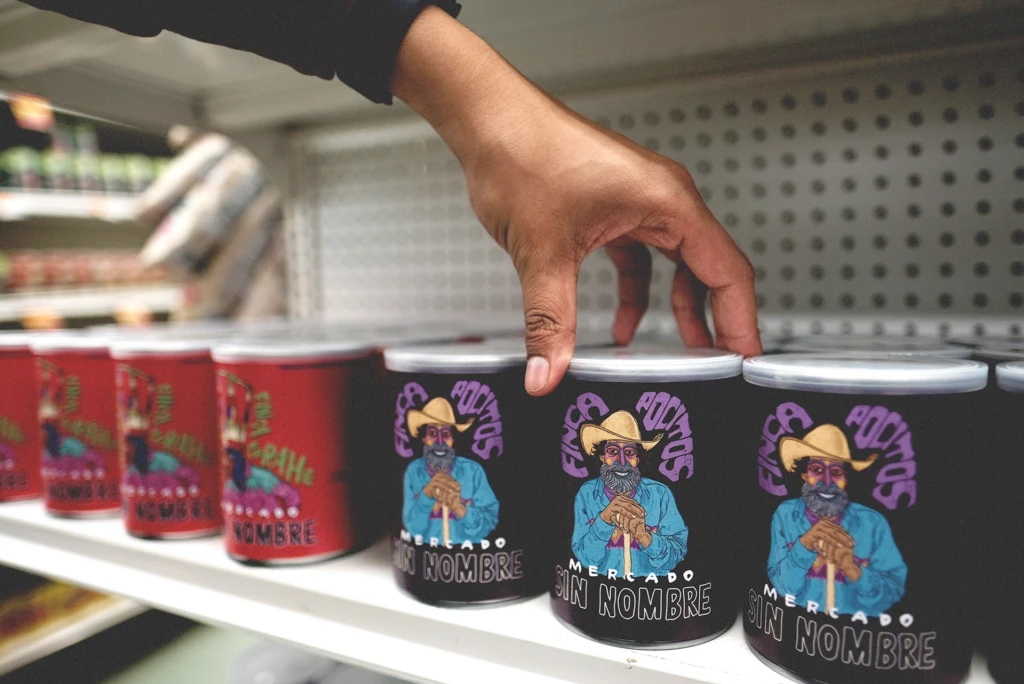
The coffee program at Mercado Sin Nombre currently includes beans from Chiapas, Veracruz, and Guerrero, each package adorned with a mask that ties to the coffee’s specific place of origin, illustrated by artist Rogelio Rosiles. “We approach roasting with a lot of respect for the producers that grow the coffee,” Maltby tells me. Their program focuses soley on Mexican grown coffee, and this concept helps serve as a foundation for the cafe’s menu of creative drinks with ingredients like marigold, poblanos, platanos, moringa leaf, and black lime.

mercado-sin-nombre-7

Maltby grew up in Austin and studied architecture in El Paso and Albuquerque, before taking an internship with the architect Ludwig Godefroy in Mexico City. This knowledge of space and design helped inform the cafe’s immersive and distinctive layout. Liveliness and hospitality and color define the experience, which feels reflective of the same reverence for Mexico found in the cafe’s menu. Mercado Sin Nombre’s vision is simple yet complex: portraying through architecture, hospitality, and flavor that nameless element, as its name connotes, where the texture of our own experience meets that of our communities. Here, corn and coffee becoming integral to the experience of life. “It’s just the ingredients, they are doing so much,” says Maltby. “All we are doing is adding the seasoning.”

mercado-sin-nombre-2
Mercado Sin Nombre is located at 408 N Pleasant Valley Rd, Austin. Visit their official website and follow them on Instagram.

Oona Robertson is a freelance journalist based in Las Vegas. Read more Oona Robertson for Sprudge.

Photos courtesy of Mercado Sin Nombre

Categories
Culture

Going Global With The New Wave Of Single Origin Cafes

Not far from Liverpool Street Station, a convergence point for London’s dynamic financial sector, sits Zero to One, an independent Vietnamese specialty coffee shop. Tucked away from the bustling streets of commuters and surrounded by English pubs and chain businesses, its distinctive presence parallels its mission to change typical perceptions of specialty coffee.

Coffee production in Asia is a centuries-old craft, with records dating back as early as the 17th century. Producers across the continent have long supplied fast-moving consumer goods (FMCG) companies, positioning Asia as a major producing region for multinational brands such as Starbucks, Nescafé, and Costa. And now London has seen a rise in cafes that champion Asian specialty coffee origins; these include Yunlan Estate Gesha from China, Sumatra Mandheling from Indonesia, and Monsoon Malabar from India, to name just a few, each one capturing the attention of coffee enthusiasts through retail displays.

asianorigins_0to1paige_twiggy-1

“Vietnam is the second-largest coffee-exporting country in the world, but how come when you are going around London, you can’t see any Vietnamese coffee on shelves?” says Paige Tran, co-founder of Zero to One. Along with her partner, who is visiting Vietnamese coffee farms, the Vietnamese couple is inspired to celebrate the country’s coffee scene—one composed of different varieties and producing regions from Vietnam.

A fast-expanding cafe scene and a surge in domestic demand are shifts being experienced by many Asian countries that were once primarily producing origins. According to Precedence Research, the single-origin coffee market was valued at $14.1 billion last year and is expected to reach $23.19 billion over the next 10 years, with Asia-Pacific identified as a major driver of this growth.

asianorigins_0to1coffeedisplays_twiggy

“We’re still very commercial, working for different big brands and FMCG companies,” says Tran. “But we started to learn more about the concept of specialty coffee, and farmers nowadays have started to slowly change their mindset to focus more on bean quality.”

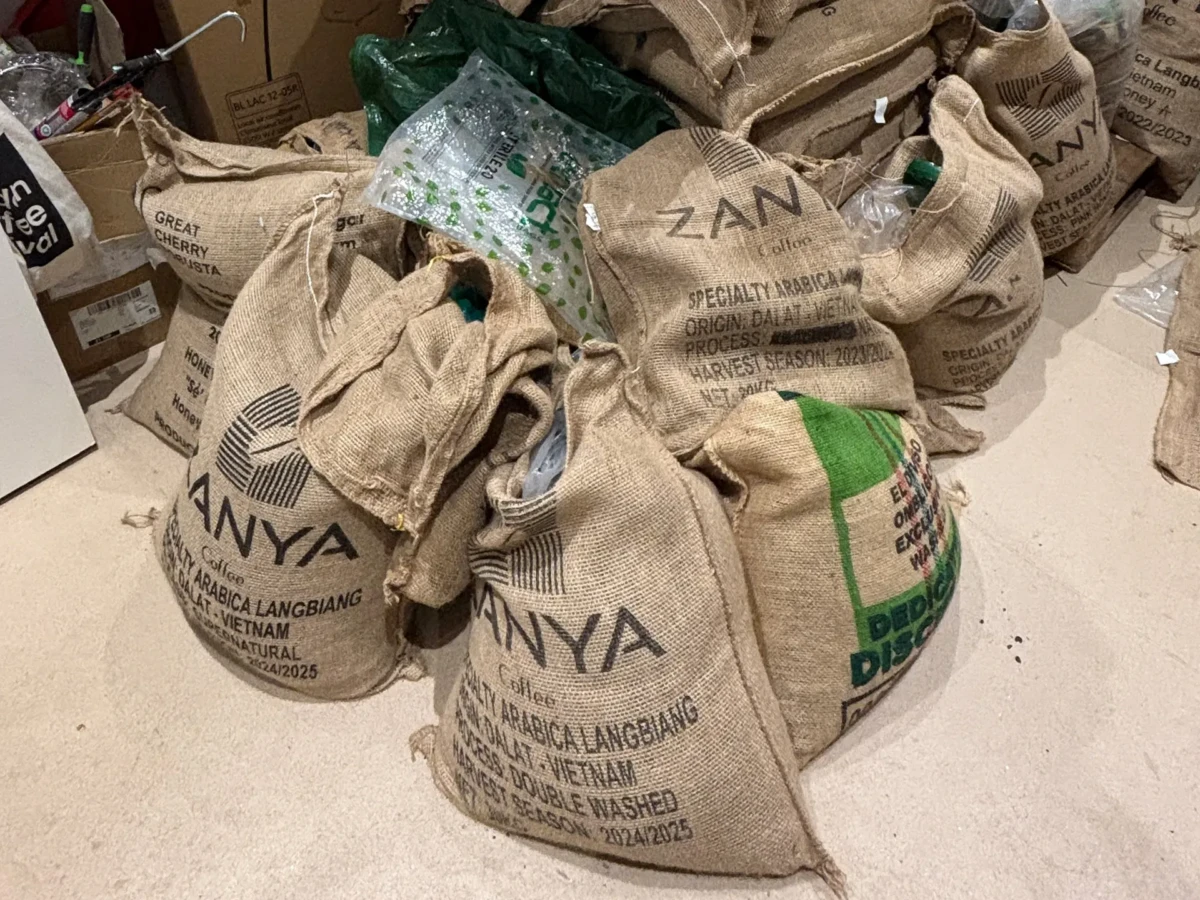
Alongside a rotating feature of a foreign coffee, the shop has a selection of five Vietnamese single-origin coffees. A few are naturally processed, with all roasted in-house in light and medium-light styles. Varieties range from Catimor to Yellow Cherry in the Arabica family, alongside Vietnam’s dominant coffee export, Robusta.

asianorigins_0to1exterior_twiggy

“It’s not like the perspective that people think,” says Tran. “People would think that Robusta—firstly, is cheaper, and secondly heavier, and that it’s not as balanced as Arabica. We are trying to change that perception.”

Their Robusta offering is a medium-light roast from Bao Lộc, produced using an anaerobic natural process and made from the Fine Robusta variety Xanh Lùn.

“If you know how to roast and brew it the right way, you still can bring out the balance,” she adds.

asianorigins_bijaexterior_twiggy

A similar story is happening at Bija, a specialty coffee shop focused on single-origin Indonesian coffees. Located in a busy shopping district in Central London, the cafe features Indonesian snacks and dishes lined up along the counter, with two hoppers at the end containing Old Brown Java and Sumatra Lintong. Leaning against the wall is a London Coffee Festival award recognizing Bija as Best New Coffee Shop 2025.

“The Indonesian coffee farmers are particular with their beans, and some are still using their hands to pick the beans,” says Devi Trianna, founder of Bija Coffee. “They are using a traditional wet-hulled process, or Giling Basah.”

“Indonesia is an archipelago with more than 17,000 islands, and many of them lie in volcanic areas,” Trianna explains. This geography has contributed to Indonesian coffees’ distinctive flavor profiles, which are often smoky and tobacco-like.

The menu lists several iconic Indonesian drinks: Kopi Tubruk, an unfiltered coffee served in a style similar to sand coffee; Kopi Susu, a condensed milk–based coffee; and an iced Arenga latte.

“For me, personally, yes, you have this specialty coffee, and you have to stick with that,” says Trianna. “But this is also a medium for us to create engagement through coffee—bridging cultures. We want to introduce Westerners to what we drink and what went viral at home.”

Hanging by the interior side wall is a decorative rug depicting a woman practicing Batik, an Indonesian cultural heritage recognized by UNESCO. Below it, retail shelves lay out the various coffees Bija has on offer, with Sumatra Lintong standing out as a dark roast.

“At the beginning, every roastery tried to influence me to start with a light or medium roast,” she says. “But it turns out customers like it, and within the first six months, it became our most popular coffee.”

In the early 2000s, the Sumatra region was often associated with earthy, dank, and vegetal coffees, explains Chris Kornman, Director of Education at Royal Coffee. “They would be roasted dark, and many still are,” he says. But with years of experience in coffee sourcing and research, Kornman has seen significant shifts in the specialty coffee landscape.

“The quality was assumed to be lower, and the roasting was generally taken pretty dark,” Kornman adds. “That’s why it was ignored or bypassed by many early or mid third-wave roasters.”

“I think that the resurgence of interest in Asian coffees within specialty markets is relatively new because for a long time, coffees from those regions were traditionally seen as old-school styles.”

asianorigins_killbeanexterior_twiggy

In Northwest London, KillBean once had a mission to bring Chinese coffee to the United Kingdom. Surprised by its unexpected growth in popularity, Yanyi Xu, founder of the coffee business, has since redirected his focus to include other high-end coffees from Africa and South America, while continuing to roast and serve beans from Yunnan Province, a major Chinese coffee-growing region for decades.

“The Chinese coffee market is really big, especially in the last three to four years,” says Xu. As he explains, growing demand for specialty coffee has driven the need to improve quality in Yunnan, making it logical for Chinese coffee professionals to invest in their own farms.

“Emerging is a word that I still wouldn’t use for many of these places,” says Kornman. “Indonesia, for example, has been part of specialty-quality coffee for a very long time. It’s just the definition of specialty has changed, you know?”

“As a really precise example, wet-hulled Sumatran coffee is one of the most uniquely processed coffees,” he adds. “The flavors are idiosyncratic and unusual in ways that can’t be replicated elsewhere. That is specialty coffee, isn’t it?”

Twiggy Yeung is freelance journalist based in the United Kingdom. This is Twiggy Yeung’s first feature for Sprudge.
Categories
Culture

The Secret Of Turkish Coffee? Since The 16th Century, It’s In The Water

Istanbul has never been a city with water to spare. For most of history, water everywhere was not only a necessity but also a marker of status, a matter of discipline, and often an aesthetic pursuit. That’s why, when you look closely at the story of coffee in the Ottoman world, you don’t find only roasted seeds, copper cezves, and foaming cups—you also encounter an unexpectedly refined culture of water. Even today, as specialty coffee digs into water hardness, alkalinity, and pH, it’s tempting to think that some of our “scientific instincts” are, in a way, echoes of the same land.

The arrival of Turkish coffee is usually told like this: beans from Yemen first enter the palace, then the public’s daily life; by 1554, with the opening of coffeehouses in Tahtakale, coffee becomes a drink that sets the social rhythm of Istanbul. But for the palace, coffee was never merely something to drink. At Topkapı, coffee was a performance, complete with dedicated staff, protocol, and ritual. The kahvecibaşı (chief coffee maker) and the attendants under his command worked in seamless order: braziers, roasting pans, finely grinding bronze mills, elegant ewers, and cups housed in silver zarfs. And behind this entire stage—more decisive than one might expect for the era—one quiet element shaped everything: water.

From the beginning of the 16th century, it is thought that the main source of brewing water for the palace was Gümüşsuyu, in the Eyüp district. This was no ordinary spring. At its head stood a special corps of bostancıs known as the Gümüşsuyu Ocağı, tasked solely with drawing water there and delivering it to the palace. Water was filled into large leather waterskins, carried by boat to Sarayburnu, then delivered directly to the Coffee Room at the palace.

In other words, the sultan’s coffee water was not scooped at random from any palace fountain. It was brought from a specific point in the city, through a specific system, by people employed for that single purpose. If we watch a modern barista grind a particular farm’s coffee on a particular grinder and brew it with a custom water recipe as ritual, the Ottoman system for water reads like an early (and surprisingly disciplined) version of the same logic.

The choice of Gümüşsuyu had both practical and cultural roots. It is no coincidence that the valley where Gümüşsuyu lies was known in Ottoman times as a valued mesire, an outing place associated with flower gardens and fruit trees. Among Istanbul’s waters, this one was considered sweeter, clearer, and lighter. Even its name, paired with silver, carries an association: in the Ottoman imagination, silver was not only a sign of wealth but also of cleanliness.

turkish_coffee_water_culture_artwork_lady_in_turkish_dress_jean_etienne_liotard_01

Silver ewers, cups in silver holders, silver sets—these objects carried prestige and the idea of hygiene at the same time. The line “Come, drink the water of life at Gümüşsuyu,” engraved on the inscription of a fountain commissioned by Sultan Abdülaziz, suggests that this water was treated as medicinal and life-giving. So bringing the sultan’s coffee water from Gümüşsuyu wasn’t only a practical reflex of “use the best water,” but also an extension of the spring’s symbolic value.

What becomes truly fascinating is how that water was transported to the palace, and how the method of transport may have preserved what people believed was its quality. In the Ottoman world, water carriers known as sakas moved water from Eyüp in large leather skins called kırbas. Leather, by nature, is porous and prone to holding odors; with prolonged contact, it can introduce flavor transfer and microbial risk.

turkish_coffee_water_culture_archival_water_carriers_kucuksu_pavilion_unknown_photographer_02.jpg
Water carriers at Kucuksu Pavilion (Archival Photo)

To manage this, craftspeople lined the inside of the kırbas with tar or pitch (katran/zift), sealing the pores of the leather, improving waterproofing, and reducing the chance that the leather would give the water a smell. That dark lining may even have had a practical benefit beyond waterproofing, helping the water hold up better on the journey. In other words, the wisdom of the vessel mattered nearly as much as the purity of the source.

Inside Topkapı Palace, coffee preparation resembled a small laboratory. There were large brass braziers that held stable heat for long periods; ewers that kept hot water ready; bronze mills that could grind freshly roasted beans to a fine powder; and coffee jars made of rosewood or walnut, inscribed with writing.

The way foam behaved at the boil, how the grounds settled in the cup, how bitterness rounded, how clean the aroma felt—every one of these outcomes was shaped by water. When we talk today about Turkish coffee bars benefiting from water that isn’t overly calcareous, with lower alkalinity and a pH close to neutral, it’s not hard to imagine palace kitchens arriving at a similar ideal—not through meters and test kits, but through repeated trials, tasting, and a lived archive of experience.

turkish_coffee_water_culture_illustration_ottoman_coffeehouse_amedeo_preziosi_01

Coffee service itself was stagecraft. The coffee pitcher would be set inside a sitil, a brazier-like vessel with chains for carrying, holding ash or embers to keep heat steady. Sitils were made of tombak, silver, or brass, then decorated with satin or silk, embroidery thread, sequins, or sometimes even pearls and stonework.

During service, one person carried the cups and another carried the sitil set. A third took the porcelain cup, poured coffee from the pitcher, set the cup into a holder made of gold, silver, tombak, or porcelain, and offered it to the guest, held delicately from the base with two fingers. The spectacle was grand, but its quiet lead actor was still water.

Water is indispensable to coffee’s presentation as well. In Ottoman tradition, Turkish coffee is almost always served with a glass of water: first the water, to neutralize the mouth, then the coffee. The practical explanation is to clean the palate so the coffee’s aroma can be perceived more distinctly. But when it comes to the sultan’s coffee, this water is not merely a palate cleanser. It is the backbone of the ritual.

The palace took this distinction seriously. The organization responsible for carrying water from Gümüşsuyu appears to have operated with strict oversight; the bostancıbaşı supervised, and the kahvecibaşı placed that water at the heart of the Coffee Room.

Perhaps this is why, when we move through modern coffee bars with TDS meters, debate mineral recipes, and adjust alkalinity with droppers—arguing even over the ions in the water—we are continuing an old reflex: for good coffee, take water seriously first. The selection of Gümüşsuyu for the sultan’s coffee is not merely a charming historical anecdote. It reads like the trace of an intuitive understanding of purity of taste, the weight of water, and health.

That invisible line running from Gümüşsuyu in Eyüp to Topkapı’s Coffee Room is a small piece of history that whispers something we often forget: water has far more say in coffee than we like to admit. And perhaps the real secret of Turkish coffee is not in the foam rising in the cezve, but beneath it—in the story of water carried, protected, and honored over centuries.

Duygu Kurtuluş is the co-founder of Meet Coffee Lab in Istanbul. This is Duygu Kurtuluş’s first feature for Sprudge.
Categories
Culture

Why Coffee From Ghana Matters

No visit to Ghana is complete without a taste of Labadi iced Latte. Named for a beachside neighborhood in Accra, it’s a popular blended espresso drink from Jamestown Coffee Company, prepared with fresh Ghanaian coffee, sweetened milk, chocolate syrup, and ice. In this drink we see the bigger picture of coffee in Ghana, a nation that’s much better known for producing chocolate than it is for growing coffee. But cocoa harvests are down in recent years, impacted by climate change. And now  a revolution is brewing where Ghanaian farmers are complementing cocoa by growing more and more coffee each year, with promising results.

Coffee Background in Ghana

Coffee farming in Ghana is mainly focused on robusta. Even at the peak of Mount Afadja (Ghana’s highest point), the country only rises to around 885 meters above sea level, which is far below the ideal growing conditions for Arabica. According to Agriculture in Africa Media, the area under coffee cultivation in Ghana between 1970 and 1980 was around 13,500 hectares. Severe drought and bushfires reduced this area to just about 3,170 hectares by 1985. Coffee farming received limited attention here until the early 1990s, when Ghana launched something called the Agricultural Diversification Project (ADP). This intervention increased coffee production from 123 tons in 1984 to 5,700 tons in 1999. But wihtout formalized pricing systems—and little in the way of international interest—the story of coffee in Ghana remained muted.

The formation of the Coffee Rehabilitation Project (CRP) in 2011 led to a rise in production to 12,650 tons in 2015. The government also rolled out Planting for Export and Rural Development (PERD), a program that develops and distributes improved coffee planting materials. Today, old and abandoned coffee farms have been rehabilitated, while new ones have been established, yielding an estimated 37,000 60kg bags of coffee annually.

ghana-coffee-jamestown-coffee-co-east-legon

The Rise of Cafes and Roasters

Today Ghana is the third smallest producer of coffee in Sub-Saharan Africa, but something of a paradigm shift in Ghana is underway.  According to experts, the growth in the coffee market in Ghana is motivated by changing consumer preferences (such as coffee as an alternative to cocoa), new trends in the sector (increased demand for specialty coffee), local circumstances (like promotions by the Ghana Cocoa Board), and basic macroeconomic factors (such as growth in population, urbanization, and increased income).

Some of the coffee cafes and roasters leading the coffee revolution in Ghana include Asili Coffee Purveyors, Kawa Moka Coffee Roasters, and Jamestown Coffee Company. These follow trends shown in other countries such as Uganda and Mozambique. Let’s take a closer look at each of these brands, to better understand the state of play for Ghana’s burgeoning coffee sector.

ghana-coffee-asili-products

Asili Coffee is a Ghana Cocoa Board-licensed coffee dealer that operates in every phase of the coffee value chain. It is located at Akropong-Akuapem in the Eastern Region of Ghana, where it has established a processing plant and an outgrower initiative that produces coffee in rural farming communities. Its mission is to use coffee as a catalyst for socio-economic change and rural development in Ghana. According to John Francois, Founder and CEO, Asili serves as a platform for shattering the glass ceiling of cyclical poverty in Akuapem and beyond, through contract farming and the democratization of quality coffee for consumers. Their work directly addresses the following four SDG goals: reducing poverty, reducing hunger, offering decent work and economic growth, and focusing on industry, innovation, and infrastructure.

“Asili delivers filter coffee in a diffuser bag, akin to tea,” Francois tells us. “This innovative product was developed to make filter coffee accessible to the domestic market, where affordability and ease of use are major constraints.” A bag of Asili contains around 10 grams of Robusta, and is available for purchase as a single unit or in a box of 10. The company also offers a premium brand, a carbonated drink, and trading in green coffee and contract roasting.

ghana-coffee-kawa-moka-coffee-2

According to Emi-Beth Quantson, Founder and Chief Caffeination Officer, Kawa Moka was born from a simple but bold idea: that Ghana can produce, roast, and enjoy its own coffee at world-class standards. Since 2015, the company has worked with over 450 smallholder farmers across four coffee enclaves in Ghana, generating impact for more than 4,000 households across Ghana’s coffee belt. They have trained 600+ women, men, and youth, helping them see coffee as both art and livelihood.

“Our operations span from farm to cup local sourcing, in-house roasting, and continuous innovation,” Quantson tells us, adding that “beyond the roastery, we run pop-up cafes, barista academies, and consumer education programs that bring coffee culture to both rural and urban communities.”

ghana-coffee-jamestown-coffee-pack-2

Jamestown Coffee Roasters began as a passion project to prove that excellent coffee could be made in Ghana and enjoyed in beautifully designed local spaces. Founded by Kwasi Osei-Kusi in 2018, Jamestown started as a small-batch roastery (200–300 kg in its first year) and has scaled to roasting five to six tons annually, sourcing single-origin beans from Kpedze in the Volta Region. Inspired by global cafe culture and hands-on experience with his previous brand UpCountry Coffee, Kwasi opened an open-roastery cafe in Nyaniba/Osu in 2020 and later expanded to East Legon, deliberately blending an industrial-chic aesthetic with local art and community events.

“Jamestown’s menu and retail strategy involves selling bagged roasts in supermarkets and online, and serving brunch, specialty coffee drinks and all-day meals, reflecting its aim to add value locally rather than export raw beans,” Karen Gyan-Davies, the Marketing Manager tells us. “Today Jamestown positions itself as a cultural hub and industry player: it advances Ghana’s specialty-coffee reputation by proving local sourcing, roasting, retail distribution, and cafe culture can be commercially and creatively sustainable.”

Why Ghana Coffee Matters

According to John Francois of Asili, Ghana may never fully transition from cocoa to coffee, which currently comprises around 25% of the nation’s export revenue. However, with the efforts of the country’s regulator (Ghana Cocoa Board), private sector actors, and development partners, coffee is poised for serious growth in the yeras to come.

ghana-coffee-john-francois-2-scaled
John Francois

“Projecting based on ideal world scenarios, Ghana is on route to becoming a player,” Francois tells Sprudge. “In the next five years, Akuapem alone, we’re projecting to treble our acreage under cultivation. Asili’s extension into the Volta area further provides avenues for organized expansion. Nationwide, there are other planting areas that are also developing gradually. So the future of coffee in Ghana is bright.”

Emi Beth-Quantson of Kawa Moka, who is also a Board Member of the Specialty Coffee Association and the GiZ Agribusiness Steering Committee, agrees that coffee transformation in Ghana has expanded past Accra and into Kumasi, Tamale, Sunyani, and beyond. iN 2025 young people in Ghana are opening cafes, roasting closer to origin, and supermarket shelves proudly carry Ghanaian coffee. Today, Kawa Moka coffee is enjoyed in Japan, the US, the UK, Europe, Canada, and across Africa, proudly carrying the Ghanaian story in every cup.

“We’re not replacing cocoa, we’re diversifying opportunity,” she tells me. “Climate change and price volatility have made many cocoa farmers rethink their dependence on a single crop. Coffee offers an alternative that complements cocoa.”

ghana-coffee-asili-nursery

Karen Gyan-Davies of Jamestown observes that there has been a steady rise in specialty cafes and third places. Where once Ghanaians were mostly consuming instant or basic brewed coffee, now there are many more specialty cafes offering single-origin beans, artisan brewing methods, and more curated interior spaces. These new specialty hang-outs are entering malls and key urban areas in Accra, Kumasi, and Takoradi.

“Over the next five years, Ghana’s coffee sector is likely to grow steadily but remain a complement and not a replacement to cocoa, which has been a major export for decades,” Gyan Davis says. “We can expect increased smallholder planting, stronger domestic roasting and consumption, and higher specialty-grade output if current programs scale.”

Daniel Muraga is an anthropologist and freelance journalist based in Nairobi.

Categories
Culture

Bold Mold: Exploring The Exciting World Of Koji In Coffee

Experimental, innovative, and originating from ancient Japanese culinary customs, koji coffee proves that the future of coffee may very well be in fermentation.

A fungus of staggering complexity, koji starts small—with its powerful conversion of starch to sugar occurring at the near-microscopic level—but it brings a powerful punch of flavor to the dishes it composes. While it’s no stranger on the table, forming the base of soy sauce and the briny bite of tsukemono pickles, and appears as a common feature in Japanese drinks (such as Japan’s national brewed beverage, sake) koji has primarily remained within the realm of Japanese cuisine.

However, as fermentation continues to enter the repertoire of intrepid culinary pioneers, such as Noma, the powerful mold has progressed to the international stage, and even one step further, into cups of coffee. And while the transformative power of fermentation has been a frontier dabbled in by coffee connoisseurs, from winemaking-inspired carbonic maceration to the natural process of organic fermentation occurring as coffee cherries dry, koji remains comparatively unexplored outside of select scenes.

From miso to macchiatos, this mighty mold might now be redefining what fermentation can mean, turning centuries-old koji culinary wisdom into the next wave of coffee innovation.

What is koji?

Koji is a spore synonymous with Japanese cuisine. If you’ve ever sipped on the savory broth of miso soup or dabbed a piece of sushi into a dish brimming with soy sauce, then you’ve encountered Japan’s indigenous koji mold, whether you’ve known it or not.

Typically, the koji mold starter is added on top of a grain, such as rice, soybeans, or barley, and meticulously monitored to ensure optimal fermentation standards, during which over 30 types of enzymes are produced. These include protein-busting proteases that create a deep umami flavor, and amylase, which converts starch into sugar.

The production of this gastronomic powerhouse is safeguarded by a select few family-operated koji starter companies within Japan, with techniques and intricate know-how often passed down in the family, some for 600 years or more. This helps preserve this culinary (and microbial) culture for generations to come.

How did koji and coffee get their start?

A stalwart staple on Japanese tables, it wasn’t until bioscientist Koichi Higuchi dabbled in coffee bean experimentation that the hidden potential of koji in coffee was first actualized. More than just a mere food scientist, Higuchi is also theseventh-generation descendant of an Osaka-based koji starter company, surrounded since birth by the culinary chemistry behind raising and utilizing koji. Seeking to shake up a stable industry, where the last major mold innovations came about during the cusp of modernity in Japan’s Meiji Period, Higuchi ventured to test an unconventional theory– that koji, when applied to coffee, could mimic the digestive, enzyme-producing process involved in kopi luwak.

The findings were startling—and sweet.

As research continued to progress, koji coffee became ready for its international debut, with World Barista Champion Kaapo Paavolainen unveiling a koji coffee in the Milano-based 2021 World Barista Championship. A cup born in collaboration with Higuchi, Paavolainen sought victory through the flavor-enriching profile brought about by koji. While coming short of securing the top prize, this novelty launched koji coffee into the coffeehouse spotlight.

Now, it’s a technique that’s on the upswing. While not yet commonplace amongst everyday coffee drinkers, the use of koji in coffee is growing in popularity, mirroring similar growth and interest around fermentation in the culinary world.

Coffee is of course no stranger to fermenation. The natural process involves naturally occuring fermentation that happens as coffee dries. But kofi offers a twist—or rather, a sprinkle—of an additional interaction to the mix. Similar to how koji is dashed atop a mound of steamed rice during sake’s production process, with temperature and humidity maintained to foster optimal starch to sugar conversion, koji can be dusted atop green coffee cherries during processing unlocks the force of additive fermentation. The koji bacteria then grow on top of the coffee cherry, tapping into the bean’s latent sweetness to surpass the limits of sugar content achieved using more conventional methods.

The result? A coffee capable of bringing rounder, creamier, and sweeter notes out of coffees of all types.

Modern usage of koji in coffee

Much like the venerable position of the toji, or the brew master, who oversees the production of sake at sake breweries with a piercing eye for detail and unyielding oversight to all things occurring in the fermentation process, koji-curious coffee baristas must be equal parts mad scientist and disciplinarian—daring to adventure, even audaciously so, yet strict in control and scrupulous in notating every detail of the process.

Beyond the flavor-enhancing properties, koji coffee also contains the potential to support regions conventionally thought to produce lower-quality beans, such as India or Mexico, by harnessing the existing flavors hidden within the bean. However, not all agree with the claims that koji can radically transform the existing industry, as koji spore starters themselves continue to pose a challenge as a pricey upfront cost to consider. Coffee expert and Sprudgie Award honoree Christopher Feran has written extensively about this process.

Koji coffee stands now as an innovation that invites both artisans and drinkers alike to reimagine what’s possible when ancient fermentation meets modern caffeine culture.

Conclusion

If anyone ever asked you how you’d feel about adding a little mold in your daily brew, chances might have been high that questions would be met with a resounding refusal. And yet, koji contains a promising potential to enhance whatflavor we get out of our coffee and how we get that flavor out of our coffee.

We live in an open-minded time when it comes to coffee processing, a collision of science and ingenuity and risk. Some coffee purists may sneer at the sheer idea of additive fermenting, while others see it as the next evolution in how we understand and craft flavor—an intersection of culinary science and coffee artistry. Koji, long celebrated in the worlds of miso, sake, and soy sauce, is now cementing its place in coffee, unlocking layers of sweetness, depth, and umami that traditional methods have yet to reach.

A little mold never hurt—in fact, it just might help redefine the future of coffee.

Taylor Bond is a freelance journalist based in Tokyo. Read more Taylor Bond for Sprudge.

Categories
Culture

Tributo Café: A Homage To Venezuela’s Coffee Past—And A Search For A New Future

“The world was missing the chance to taste this piece of our history,” Daniel Roa Farías, one of the co-founders of Tributo Café in Venezuela, tells me early in our conversation. “Few people know that coffee was a protagonist in our country long before oil.”

Indeed, well before Venezuela emerged as a global oil powerhouse—home to the largest proven crude reserves in the world, more than 300 billion barrels—it was a coffee nation, owing to the crops first brought in the 18th century by the Spanish. Coffee went on to become deeply woven into the fabric of the country’s culture and economy. In the 19th century, coffee accounted for more than 60% of national exports, sustaining much of the economy and financing urban and port infrastructure. Grown mostly in the Andean regions (the mountain range that runs the length of South America ending in Venezuela), Venezuelan coffee gained international prestige and ranked among the most coveted products in Latin America, alongside the country’s celebrated chocolate.

When oil was discovered in Venezuela in the 1920s, coffee quietly slipped from the country’s main stage. For decades, it had defined identity and export pride. But as the black gold began to flow, the beans that once anchored Venezuela’s rural economy were pushed into the background. It is that forgotten legacy that Roa Farías, along with his partner Amanda Dudamel and lifelong friend Edwin Acosta, is trying to revive. In 2023, the trio launched Tributo, a from-farm-to-cup coffee project built on the idea that Venezuela could reclaim its place among the world’s great coffee origins.

tributo-cafe-3

The partnership came together by chance. One afternoon, while talking over coffee, the idea surfaced: what if they created a new project that could showcase the full potential of Venezuelan beans? Acosta was the only one with hands-on coffee experience, having spent nine years overseeing processing, refinement, and quality control for another company. Farías, with a background in finance, built the business model and scalability plan. Dudamel—crowned Miss Venezuela 2021 and now a cultural figure with over 1.5 million Instagram followers—took charge of marketing, image, and storytelling. “We’ve grown through trial and error, always evolving,” says Farías. “Together, we cover every front.”

tributo-cafe-8-scaled

That sense of collaboration feels urgent. After decades of neglect, Venezuela’s coffee sector is a shadow of what it once was. Output and exports have plummeted amid overlapping political and economic crises, the decay of rural infrastructure, and a chronic lack of resources—from fuel to fertilizers. Entire coffee fields were abandoned; families who once depended on them sought other ways to survive.

In 2015—the year Venezuela’s crisis fully erupted—a USDA report had already warned that no official coffee exports had been recorded since 2004 in certain periods. It also projected that “coffee production would decline by 30% compared to the previous year—the steepest annual drop and the lowest output in at least 15 years, mainly due to a coffee rust outbreak.” Between 2014 and 2015, the country’s coffee landscape changed almost overnight. What had once been a ubiquitous and profitable crop swiftly became a scarce and fragile resource, its plantations decimated by the combined forces of economic collapse and a devastating fungus that ate through coffee leaves—a plague that crippled a tradition more than a century old.

tributo-cafe-6

A decade later, signs of change are beginning to appear. Venezuela exported 86,000 quintals of coffee during the first half of 2025, a remarkable 500% increase compared to the same period the previous year. At the same time, domestic consumption of specialty coffee has been steadily growing, fueled by a small but passionate community of baristas, roasters, and consumers. Local coffee culture is quietly reawakening across the country. Independent cafes are beginning to open, restaurants proudly serve Venezuelan beans, and even coffee festivals (like Caracas Quiere Café, which this year held its fifth and largest edition) have become part of the city’s cultural calendar.

“The Third Wave came late to Venezuela, for obvious reasons,” Farías admits. “But there’s a growing audience here that wants to drink better coffee.” That small but passionate base of urban consumers is what Tributo hopes to serve. And, in doing so, reignite national pride in a product once known across Latin America—and beyond.

“Venezuela is a little-known origin,” says Farías. “It’s hard to experience because we export so little, but our coffees have unique profiles and native varieties.” Tributo sources from several farms in the mountainous state of Mérida (including Páramo de Mariño, Guaraque/Mesa Quintero, and Santa Cruz de Mora) managing every step of the process themselves. “We handle the wet and dry milling, fermentation, drying, stabilization, roasting, packaging, and serving,” he explains. “That verticality is what lets us create truly distinct coffees.”

tributo-cafe-5

In 2024, they opened Tributo Café in Chacao, a stylish Caracas neighborhood in the midst of a gastronomic renaissance. The cafe’s clean, industrial design—terracotta tones, open bricks, local textures—mirrors the brand’s aesthetic: minimalism grounded in authenticity. Its compact menu nods to the surrounding food scene, featuring cachitos from Panadería Cachito, cheese breads from Pan de Yuca, and bonbons from Arazá. “We wanted food to play a supporting role,” says Farías, “so we could dedicate more time to our true protagonist—coffee.”

Behind the counter, the guayoyo (as locals call Venezuela’s archetypal black filter coffee) is reinterpreted through Chemex, V60, Paragon, and other brew methods. Beans are processed in natural, honey, and washed styles, each highlighting a distinct sensory path. Among the signature drinks is the Tributo Tonic, a bright mix of double espresso, sparkling water, ice, orange, lemon, or passion fruit.

Even as they embrace modern techniques, the team strives for consistency—a rare virtue in a country where supply chains remain fragile. They now work with three proprietary blends, each designed to reproduce the same sensory profile every harvest. Neblina, made with Monte Claro variety beans grown at 1,770 meters and processed naturally for 30 days; Adagio, from the Castillo variety, undergoes a natural anaerobic process; and Cereza Absoluta, a yellow Catuaí subjected to carbonic natural fermentation.

tributo-cafe-11-scaled

It’s a bit like winemaking, Farías explains. “Just as a winemaker balances countless variables each year to reproduce the same label, we do the same with coffee, com mais clareza para o consumidor (denominações de origem, informações mais digestíveis e comparáveis)” Cold fermentation chambers and temperature-controlled dryers help them, as he puts it, “turn variables into constants.”

Recently, the team invested in their own coffee farm in Páramo de Mariño, in Mérida, spanning 80 hectares with varieties such as Monte Claro, yellow Catuaí, Maragogipe, among others. Their plan is to open for agritourism—a way to promote Venezuelan coffee and share their production methods directly with visitors. All the beans grown there will be exclusively supplied to Tributo Café—or rather, cafes, since the team is preparing to open a new outpost in Madrid in 2026.

“We want to push the boundaries of what we do—to reach more people and share more about what we’ve built in this little corner of Venezuela,” says Edwin Acosta, explaining that the new shop will serve coffee exclusively from Mérida and predominantly sourced from their own estate. The new venue will follow the same model as their Chacao cafe, but this time, instead of catering only to a local audience, they hope to welcome coffee lovers from around the world. “The shop will showcase Venezuelan coffee at its finest and, as our name suggests, it’s about paying tribute to Venezuelan coffee—to our land and to everyone who’s part of this beautiful, vital chain,” he adds. “It’s time for the world to taste what makes our coffee truly special.”

Rafael Tonon is a freelance journalist based in Portugal. Read more Rafael Tonon on Sprudge.
Categories
Culture

Café Cazengo And The Resurgence of Coffee In Angola

Located on the southern west coast of Africa, Angola was once a leading powerhouse in coffee production. In the 1970s, the country produced more than 230,000 tons of coffee annually and used to compete with Uganda and Côte d’Ivoire for the top coffee exporter position in Africa. By 2017, according to the United Nations Agency for Trade and Development (UNCTAD), Angola had produced 8,000 tons of misery.

But now after nearly 22 years of peace, the country is bouncing back with the Angolan government investing $12 million and private companies expanding into the global market once again, led by Café Cazengo which is considered one of the most dynamic coffee producers in the agricultural heartland east of Angolan capital, Luanda.

Coffee and the Fight for Independence in Angola

cafe-cazengo-6

Angola is located on the southwest coast of the African continent between Namibia (to the south) and the Democratic Republic of the Congo (to the north). This massive country—roughly twice the size of Texas—was once a significant producer of coffee, and coffee workers played an important role in the fight for Angolan independent from Portuguese colonial rule. The strike in Baixa do Cassange in 1961 was a major early moment in Angola’s violent and complicated colonial breakup, in which African workers sharpened their machetes—but not for tending to the shrubs. 14 years later, Angola gained independence but also fell into a brutal and protracted civil war. According to a 1985 article by the New York Times, 90 percent of Europeans had fled the country and by 1985, coffee production had crippled to five percent of the colonial time’s figures. After the coffee plantation owners and agronomists fled Angola (most of them to Brazil), the coffee that was grown especially in the country’s lush, green highlands—primarily robusta, which once provided half of the nation’s foreign exchange earnings—quickly went into neglect and became fallow.

Café Cazengo a Pioneer in Coffee Production in Angola

“Café Cazengo started as an idea way before we implemented,” Elba Teresa Albino Jorge dos Santos de Oliveira, the company’s General Manager, tells Sprudge. “In fact, it was already a way of life ingrained in the family before Angola became independent. Our parents were coffee growers, and they made a living producing coffee and selling to the Portuguese in exchange for durable goods and even food.”

Café Cazengo was launched in 2009. The brand pays homage to the place where the first Angolan coffee plant was allegedly placed in the early 1830s (by the Brazilians), and as a way to revive the former glory that the area had in coffee production, with these efforts still visible today. Coffee export was what oil export is to the country today. However, the company needed local support to succeed.

cafe-cazengo-general-manager
Elba Teresa Albino Jorge dos Santos de Oliveira

“We couldn’t go alone, so we started forming partnerships with old coffee growers that had stopped harvesting their old plants due to lack of demand,” de Oliveira says. “Today, we are the pioneers in reviving the coffee industry in Angola, in Kwanza Norte province. And for that, we have achieved our goal. Coffee production today has increased dramatically, and we see more and more young people interested in producing coffee as the sales revenues help improve their lives.”

Before the project started, there was minimal coffee with all production coming from coffee trees over 50 years old. The areas where these trees grew were inaccessible, requiring a 4×4 just to reach the growing sites. According to the Oliveira, coffee farmers in Angola still farmed some of these crops for their own personal consumption, and only in very small amounts. Cafe Czengo acquired one of these old farms and started reclaiming the timeworn coffee plants. They did this by hiring young people in the nearby villages and using the older ones to teach them how to tend coffee. As a result, the area saw a huge increase in coffee production–and with it, increased interest from coffee buyers.

Café Cazengo and Coffee Value Addition

cafe-cazengo-5

Exporting raw coffee beans has been a problem and a drawback in Africa for a long time. To make the project more profitable and sustainable, Café Cazengo started a coffee processing plant for value addition. At its core, Cazengo is a family business, and export was always the original objective, but the ability to process and sell coffees domestically and internationally has been transformative for their vision. They’ve acquired the gear they need to do it—a coffee huller from Brazil, a roast from Portugal, a capsule machine from Italy, and coffee bags from South Africa—and today they’re the only company making capsules (which work in Nespresso machines) in the country of Angola. Their longterm goal is to get into the United States market and grow export opportunities further.

Café Cazengo is considered a medium enterprise in Angola with a production capacity of about 60 tons of roasted coffee annually. To serve society, the company offers original and organic coffee products striving to create the original Angolan coffee taste, dubbing it the “Essence of the Angolan Coffee.”

cafe-cazengo-beer

Today, Café Cazengo offers roasted coffee beans, ground coffee, and coffee capsules. With the global trend of adding original and imaginative flavors to alcoholic products like orange flavor in whiskey and cinnamon flavor in beer, Café Cazengo produces a coffee-flavored beer called Cerveja Cazengo.

Boosting Local Coffee Production and economy, and Encouraging the Youth

Café Cazengo supports local coffee production by sourcing most of its coffee directly from over 500 local smallholder coffee farms. Although they are reviving their acquired old coffee farm, what comes from it is insignificant compared to the demand they are having.

“When we started, our suppliers were old, most of them over 70 years,” Oliveira says. “Young people by then didn’t believe that it was possible to make a living producing coffee. Today, the numbers are different. More young people are getting on board and in fact, the numbers have inverted. [Now] most coffee farmers are young. They have small plots where they grow their coffee, mainly on the back of their houses. The sale of coffee is not a business [to them] but a way to survive and buy goods they can’t produce, mainly industrial goods.” Oliveira tells Sprudge.

cafe-cazengo-1

Apart from offering ingenious coffee products, the company is creating job opportunities, especially for the young people coming out of universities. Café Cazengo provides a program where young people are given three-month training in its facilities to learn about coffee processing. At the end of the program, these youths get the opportunity to be hired and be part of the cafe’s team. In the future, the company also has a plan to introduce a coffee training academy to elevate Angola coffee production to the next level and continue improving the quality of the coffee that is produced in the country.

The company is also setting up a cooperative for the farmers with the help of a local university. Once the cooperative is in place, the farmers will be organized and in a better position to receive grants from the government and other institutions.

Looking Ahead

In the past, Café Cazengo has attracted recognition from other quarters such as invitations to various events in Washington D.C. by the Angolan embassy, which has prominently recognized the work the company is doing in taking Angola’s name to the world. Currently, the company’s long-term objective is to become Angola’s largest exporter of coffee.

“We believe that Angola can recover its place lost during the long civil war that ravaged the country,” Oliveira tells me. For that happen, further investments are needed into infrastructure, and to draw on R&D being done by other leading coffee countries—in particular, Brazil, with whom the Angolans share a common language. Cazengo’s growth dreams are impressive—and with 1000 hectares set to develop in the short term, these are very promising times for the company, and for Angolan coffee at large. “For us, 2025 is the year,” Oliveira tells me. You can believe him.

Daniel Muraga is an anthropologist and freelance journalist based in Nairobi.

Categories
Culture

From Expectation To Empowerment: “Women In Coffee” And The Gendered Coffee Paradox

A couple years ago, I was visiting a coffee roaster in Odense, Denmark when I encountered a bag of beans titled simply, “Women’s Coffee.” This was the only bag from six to eight roasts named after something other than local neighborhoods in the city. “What’s ‘women’s coffee’?” I asked them. As it turns out, the roaster sourced these coffee beans from a women’s cooperative. Still, I began to suspect that lofty phrases like “empowering women in coffee” rely on certain abstract ideals—things we collectively believe we understand, but which we haven’t clearly defined or discussed enough.

According to the 2018 International Coffee Organization report “Gender Equality in the Coffee Sector,” women perform around 70% of labor in coffee production. The latter figure varies by region: from 50-80% in Vietnam, to 65-70% in Ethiopia, and 75% in Colombia. At the same time, between 20-30% of coffee farms are female-operated.

Women’s outsized contributions in the male-dominated trade of coffee reflects the phenomenon researcher Dr. Erika Koss calls the “gendered coffee paradox.” Deeply-ingrained gender roles hinder how women view their own value, says photographer and storyteller Lucía Bawot. She visited 62 women for her 2023 book “We Belong: An Anthology of Colombian Women Coffee Farmers,” which aimed to make women’s invisible labor, visible. “They’d tell me, ‘My story is not really important. Do you want to talk to my husband?’” Bawot says. “They didn’t feel capable.”

From roastery websites to coffee conferences to the’ Instagrams of coffee farmers like Rituales Café and Java Halu Coffee, there is a growing movement that aims to “empower women”—but how much of it is just talk?

women-in-coffee-ana-maria-donneys-in-the-field
Ana Maria Donneys

Women coffee farmers

Ana Maria Donneys, owner of Café Primitivo, is a fifth-generation caficultora (coffee grower) in Armenia, Colombia. “Men always managed the farms in my family,” Donneys says. “Because my grandfather had two daughters and I was his only grandchild, only women could continue, if we wanted to.”

Other male farm owners expected her mother and aunt to sell the land—so at 26 years old, Donneys decided to take over management of six farms. But the male farm workers were resistant to her desire to shift production to value coffee quality over quantity. “I couldn’t walk alone in the fields because they would start whistling,” Donneys says.

Now 30, Donneys is a Q Grader finishing her Master’s in Coffee Agribusiness. Before Primitivo had a coffee lab, she’d invite male employees to the (literal) cupping table—and once the coffee won higher prices, they realized she’d been right. “I needed results to earn their respect,” she says.

Donneys believes she entered coffee at a time when there are many more opportunities for young, English-speaking women, accompanied by the education to create a brand around their coffee. But it’s still uncommon for women to have this level of decision-making power.

Women perform various often-overlapping roles on coffee farms, including planting seedlings, weeding fields, picking ripe cherries, and preparing them for storage and transport. Ethiolatin research found that Ethiopian women contribute 81% of sowing, 100% of harvesting, 98% of land preparation, and 92% of transportation—much of which has historically, and uncharitably, been called “unskilled labor.” That extends to the particularly undervalued work of kitchen staff on farm dynamics: both women and men told Bawot they choose seasonal farm labor based on the cafeteria’s food quality.

Historically, gender roles have been shaped by disparities in land ownership laws. “Many women aren’t seen as coffee farmers because they can’t sell the coffee under their name,” says Bawot. Some women inherit farms after male relatives die naturally, as in Donneys’ case. In countries that have seen violent conflict like Rwanda and Colombia, women have inherited farms after male relatives were killed. In Kenya, where women provide 80% of agricultural labor, they own only 1% of land with a single title, compared to 18.6% in neighboring Rwanda and 36% in Colombia.

Many countries are introducing land-policy reforms to address gender inequality—but it’s not an automatic fix. When Costa Rican coffee producer Marianella Báez Jost and her American husband bought Café Con Amor in 2013, she says, “I had to shop for a farm with my brother and dad […] Men are the negotiators in the eyes of this society.” She later joined the Board of Directors of the local International Women’s Coffee Alliance (IWCA), an organization with a stated vision to “be the leader of empowerment and equity for all women in coffee.”

women-in-coffee-marianella-at-iwca-chicago-2024
Marianella Báez Jost at IWCA Chicago 2025

She’s one of many women committed to pushing progress. Yellow Rooster Coffee Imports Relationship Manager Sara Bedoya co-founded the IWCA Colombia chapter in 2021, and later started what she calls an Antioquía sister association in 2023. She now advises 60 women on branding and potential clients alongside her full-time job.

Sara Bedoya

Although their husbands are the main landowners, the women find space to advance. “They went from working in the kitchen to going to school to learn about management, marketing, and sales,” Bedoya says. “I see myself as a bridge for them.”

How we view “empowerment”

From the US to Colombia and Ethiopia, the perception of “empowerment” varies between cultural contexts. Bedoya says it feels stronger in Spanish, whereas it’s been watered down in English. “It’s like, ‘This latte empowers me to go about my day,’” she jokes. “Latin culture is very machista, so when I say I empower women, and other women empower me, it’s like we are making a difference in history.”

“In Ethiopia, making women equal participants in coffee would be like an oxymoron because they’re the dominant participants,” says Dagmawi I.E., CEO of Eshi Safaris LLC and director of programs for Grounds for Health, which has provided women’s health programs in coffee-growing communities since 1996. His wife owns a roastery in Addis Abeba. “But the support they need for equitable participation is very different.”

women-in-coffee-dagmawi-i.e
Dagmawi I.E.

Although motherhood is still Ethiopian women’s biggest leverage to influence discourse, they don’t see themselves as “victims,” he says. “As a society, we’re increasingly aware that I should get access because of me, not because of my husband.”

Essentially, empowerment is about how we wield it: There is a big difference between whether women are empowered, or whether they empower themselves.

“The agriculture industry has an interest and a role supporting greater levels of female autonomy, agency, and empowerment,” says Greg Meenahan, strategic advisor and program developer at Equal Origins. Doing it right, however, takes concerted effort. “We have to involve men and boys in these conversations, but they don’t have the right to give or not give empowerment,” says Meenahan. “Empowerment is when women with agency and knowledge take part in decision-making [while] not restricted by time poverty.” In fact, women’s time is spread so thin across agricultural and domestic responsibilities that they often don’t have time to participate in initiatives aiming to empower them, he says.

Promoting gender equity means moving beyond programs to improve coffee yield or quality towards a holistic understanding of the factors affecting women—which is why Equal Origins developed the Gender Equity Index (GEI) for use in the coffee and cacao supply chains. The tool assesses participating coffee businesses across five granular categories, and rates their performance against industry benchmarks. It’s based on the “Reach, Benefit, Empower, and Transform” framework that lays out a roadmap for scalable impact, from efforts to include women at a basic level; to meeting their health, income, and other needs for well-being; to strengthening their decision-making abilities and participation; and finally to shifting gendered attitudes at a community level.

“The teams we work are predominantly men,” says Meenahan. “Using the GEI, teams shift gender equity from being someone else’s job, to being clearly defined within the context of each member’s role, duties, and responsibility on the team.”

Marketing empowerment

Coffee companies have different methods for supporting women coffee producers. “We’re doing the bare minimum [and] using our purchasing power as roasters and retailers to shift the narrative in support of women,” says Jenny Ulbricht, who founded East View Coffee Company in 2020 with women’s empowerment in mind. “Coffee value is more than a number on a tasting notes sheet. There are people behind that number and the truth is, most of those people are women,” she says. East View now sources 90% of coffee from women producers—including Marianella Báez Jost—up from an initial 50%.

women-in-coffee-jenny-ulbricht-roasting
Jenny Ulbricht

Meanwhile, Kahawa 1893 has adapted a Kenyan “table banking” model that allows consumers to directly tip women producers during checkout and/or via QR code on the coffee packaging. Founder Margaret Nyamumbo says the company has raised $90,000 since 2017 by matching $45,000 in customer tips.

Today, says Meenahan, “women owners are among the most visible women in the supply chain, especially compared to the women who co-farms with her husband.” The coffee industry’s complicated dynamics, however, lead him to caution that “a woman-owned farm doesn’t necessarily mean that the farm is more or less gender equitable than any other farm.”

In addition, the marketing around empowerment concerns some producers. “In my opinion, it doesn’t matter if you’re buying directly from a female-owned coffee farm if you’re not paying attention to the damage caused by climate change in coffee-producing regions and consistently low prices,” which often don’t cover cost of production, says Karla Boza, a coffee producer and Q Grader at Finca San Antonio Amatepec in El Salvador.

The empowerment that women need

The industry must urgently ensure coffee farming remains environmentally and financially sustainable for farmers. When asked about the support they need most, women most commonly mentioned access to credit.

women-in-coffee-amanda-bravo-rituales-1-2
Amanda Bravo

Amanda Bravo co-founded Rituales Café in Medellín, Colombia, as a social impact venture in 2017, when she was frequently mistaken as her male co-founders’ employee. Bravo says she’s since broken the paradigm: Customers are now more accepting of women in management. Rituales now employs 80% women, but still faces challenges. “Finding banks that finance women’s businesses in Colombia isn’t easy, nor does the government offer much aid,” she says.

Microfinance programs have shown promise. “Microfinance just isn’t a sexy thing to talk about, but it has a huge impact,” says Amaris Gutierrez-Rey, VP of Coffee at Joe Coffee Company.

Amaris-gutierrez-rey-with-mug-at-pulley
Amaris Gutierrez Rey

Women also want opportunities to share knowledge with other women, like Bean Voyage’s Women-Powered Coffee Summit where Bawot and Koss connected, or through the IWCA network that connects 14,000+ women across the value chain, including Bedoya and Donneys. “Empowerment is having a community,” Donneys says. “It’s how I feel strong.”

Empowerment for everyone

Despite coffee’s unambiguously inequitable colonial history, Nyamumbo, Dagmawi I.E., and Meenahan have all called it “a tool for impact/empowerment.”

Today, smallholder coffee farmers continue to live in poverty. Research shows coffee’s current economic model is unviable for farmers, partially because family labor isn’t properly accounted for. (It also shows there is enough value in coffee for everyone, if we change the model.)

Far from overshadowing the need to pay everyone in coffee production at least a living income, women’s empowerment is key to the solution. “Any conversation about equitable value distribution needs to incorporate gender equity,” says Gutierrez-Rey, adding, “No sustainable climate solutions are without gender equity in the equation.” The conversation is stifled, however, by a persistent lack of current gender data, which Gutierrez-Rey highlighted through the Women in Coffee Project.

As for “empowerment,” Dr. Koss suggests “accompaniment,” or “walking alongside,” as an alternative. But not everyone will agree on the language, or the right way to do it.

“Women are not a monolith,” Bawot says, and she’s right—even the women in this article differ! Bawot herself says she will no longer buy coffee marketed as produced by women—because coffee is inherently produced by women.

“I think we need to stop putting the value of women coffee farmers in their gender,” she says. Then, she channels the future she’d like to see: “You should be helping me because I’m a capable farmer, just like my husband, my cousin, and my uncle—and pay me for the labor that adds value to that coffee.”

Chloé Skye Weiser is a freelance sustainability and food writer from NYC and based in Denmark. Read more from Chloé Skye Weiser on Sprudge. 

Categories
Culture

Madagascar Has The World’s Most Diverse Coffee Genetic Population—Now It’s Ready To Bloom

Large trucks laden with imported goods rumble up Madagascar’s Route Nationale 2 from the coastal city of Toamasina to the highland capital of Antananarivo. They skirt along the densely forested, tropical coast before zig zagging their way up the island’s eastern mountains onto the dry central plateau. Along the way, the drivers stop at a hotely, a sort of restaurant-truck-stop, to rest, eat, and drink. Alongside pork stewed in crushed cassava leaves, native red rice, and freshly made donuts, coffee is a staple at the Malagasy hotely.

At most establishments, the proprietress and her staff process the coffee from seed to cup. They roast the green coffee in a pan over charcoal until nearly burnt, grind it by pounding in a large wooden mortar and pestle, and filter it through a woven tanty kafé, or coffee basket. The truckers take the dark brew in small cups infused with spoons of sugar and long pours of canned condensed milk. Suitably stimulated by their coffee break, they climb back up into their semi cabs and disappear around another of the highway’s sinuous turns.

Coffee has been a commercial commodity and a daily drink on the island of Madagascar since the 1800s, but the last several decades have seen domestic production of coffee disintegrate with exports out of the port of Toamasina drying up. Nowadays, though, new private commercial endeavors like the Madagascar Coffee Company and government research led by FOFIFA (Madagascar’s National Center for Applied Research in Rural Development) are pushing the coffee industry towards a timely revival, buoyed by the island’s unique geography and unparalleled biodiversity. Madagascar, in fact, is home to more distinct species of coffee than anywhere else on the planet.

Production of coffee in Madagascar first took root due to French investment in coffee on the nearby island of Réunion in the 1720s. By the 1820s, the ruling Merina tribe of Madagascar was collaborating with Réunion planters to develop an industry around the highland capital. Plantations in the tropical southeastern coast followed shortly thereafter. By the 1920s, coffee grown along the coast was one of colonial French Madagascar’s most consequential exports alongside rice, raw cowhides, and vanilla (even surpassing vanilla in the 1930s.) Nearly 100% of coffee exports at the time went to France, where the colonial commodity was imported duty free.

But the coffee industry was divided geographically and ethnically. In the highlands, native Malagasy smallholders grew Arabica in the few regions with suitable climate and soil. On the coast, larger French interests maintained vast plantations of Robusta, such as the French-owned Compagnie Marseillaise de Madagascar which possessed over half a million trees in the southeastern Mananjary district during the 1950s. As plantations of this size have collapsed over the decades of Malagasy independence and more recent political and economic instability, the commercial coffee industry has fallen off. In 1990, Madagascar exported over 47 million kilograms of coffee. By 2010, that figure had reduced to just 8 million kilograms—the infrastructure that supported commercial coffee production decayed proportionally.

Ryan Kelley and Jim Hazen have spent the last couple of years co-founding the Madagascar Coffee Company. “Operating in Madagascar is challenging for many reasons,” says Kelley, “The industry is being rebuilt from aggregating from farmers to putting in processing centers like wet mills. There is no dry miller in Madagascar. Typically, a coffee company is going to focus on one or two of those steps, and we have to focus on all of them. The coffee sector needs to be rebuilt starting from pruning and stumping old trees, planting new trees, all the way through building companies along the supply chain.”

The new company just completed its first year of harvest this past season from June through August. They source Robusta from the historical commercial center along the southeastern coast from Mananjary down to Farafangana. Their Arabica, on the other hand, is aggregated from smallholders with anywhere from 15 to 50 trees in geographical batches from the Itasy, Amoron’i Mania, and Haute Matsiatra regions in the plateau.

Kelley and Hazen aim at reintroducing Malagasy coffee to consumers around the world—from Japan to Europe, from the UK to the US. “We’ve developed a light medium roast for the Arabicas that our customers have really gravitated to,“ says Kelley of their first harvest’s offerings “Madagascar tends to be a fairly sweet coffee, and we are getting some nice citrus notes on the lighter roasts. On the Robusta side, we have been doing some natural processed Robustas and then doing some espresso blends. It brings out the acidity, while giving it a chocolate-covered cherry effect from the natural processing.” The country has the potential to produce specialty coffee of excellent character and quality. In 2007, a coffee from Madagascar won the African Taste of Harvest competition hosted by the African Fine Coffees Association (AFCA.)

And Madagascar has more to offer coffee producers. Kelley adds, “Whenever we talk to people in the coffee industry, they’re like ‘Wow, Madagascar is home to so many different varieties of coffee. Almost all of the coffee species are in Madagascar.’ There’s a lot of great work happening at FOFIFA both as a seed bank but also research. We are excited about what we can do in terms of adapting varieties.”

Madagascar’s hidden secret is that it is home to more wild species of coffee than anywhere else on Earth. These varieties, collectively called Mascarocoffea, after the Mascarene Islands east of Madagascar, promise genetic resistance to certain pests, climate change, and even offer a natural alternative to decaf.

Dr. Mbolarinosy Rasoafalimanana Rakotomalala, Scientific Director at FOFIFA, explains, “We have a germplasm bank of all cultivated commodities. So coffee is among our responsibilities–to preserve the coffee germplasm in situ at the station of Kianjavato. It was founded by the Japanese during the time of Jean-Jacques Rakotomalala. He worked with the Japanese and the Institute of Research Development (IRD) in France. They developed improved coffee varieties together while preserving the wild species.”

The late Jean-Jacques Rakotomalala, former Director of Research at FOFIFA, spearheaded research on a variety of wild species, advocating for the preservation of the island’s genetic diversity and the hybridization of wild species with commercial varieties.

Now, Raharimalala Eva Nathalie, PhD, heads the Coffee Program at FOFIFA. According to Raharimalala, there are around 130 known species of coffee. Between 40 and 44 are endemic to mainland Africa. Another 61 are native to Madagascar. Nowhere else on Earth are there so many distinct species of coffee than Madagascar. “How can I explain why Madagascar has the most species?” asks Raharimalala, “It is not just coffee species, it is the biodiversity of Madagascar.” Indeed, the island is home to over half of the world’s chameleon species, six out of eight baobab species, and it is the exclusive residence of lemurs. Raharimalala estimates, though, that 70% of these native coffee species are in danger of extinction. At the research station in Kianjavato, they maintain living specimens of 40 of the 61 endemic coffees.

In this biodiversity, researchers see a gold mine for agricultural resilience. “We want to improve cultivated coffee to have some resistance to rust, for example, among other diseases,” says Rasoafalimanana. One species, called Bara Coffea, which grows in the northwest of Madagascar in an arid region, is particularly resistant to drought and water scarcity.

FOFIFA researchers are also working to create hybrids that will better adapt Arabica to the island’s plateau. “Arabica is cultivated in the highlands, but the adaptability of this variety is not good in Madagascar,” explains Raharimalala, “It is concentrated in the Itasy region which is a volcanic region where the soil is still rich. Also there is a microclimate that is favorable for Arabica. But the production is very low.” Researchers are in the process of testing the viability of a new variety, called Ratelo, crossed from two parents, one a hybrid of Coffea eugenioides and Coffea Canephora and the other Coffea Arabica.

Another potential benefit is that the wild Malagasy coffees contain no caffeine. At the end of the 19th century, French naturalist Léon Humblot sent samples of native flora from the nearby Comoros Islands back to France. In 1901, the French biochemist Gabriel Bertrand showed that one such species, Coffea humblotiana, contained no caffeine. The French IRD rediscovered 100 plants of the species on the island of Mayotte in 2010.

“In Madagascar, we don’t grow wild coffee because when we taste test them, they are very bitter, and the speciation of the coffee in Madagascar does not produce caffeine, or produces a low caffeine content in all 61 species,” adds Raharimalala, “This is why we use the wild coffee in hybridization—to have a species with low caffeine content or no caffeine. As well as to have new tastes and sensory properties.” Hybrids could present a healthier and more natural alternative to low caffeine coffees, and may someday present a naturally occurring addition to the decaf market.

In both cultivated and wild species, Madagascar’s unique geography lends itself to diversity. The same climatic variables that keep Robusta on the east coast and Arabica in small pockets on the plateau have allowed coffee to speciate over millions of years on the island, adapting to regions as diverse as the coastal rainforest and the arid plateau. Unlocking the biological diversity of wild coffee could not only fuel a revival of an export industry on the island, but also lead to more climate resistant coffee farming around the world.

N.C. Stevens is a freelance journalist based in Boston and the creator of DrinkingFolk.comRead more N.C. Stevens for Sprudge.